|
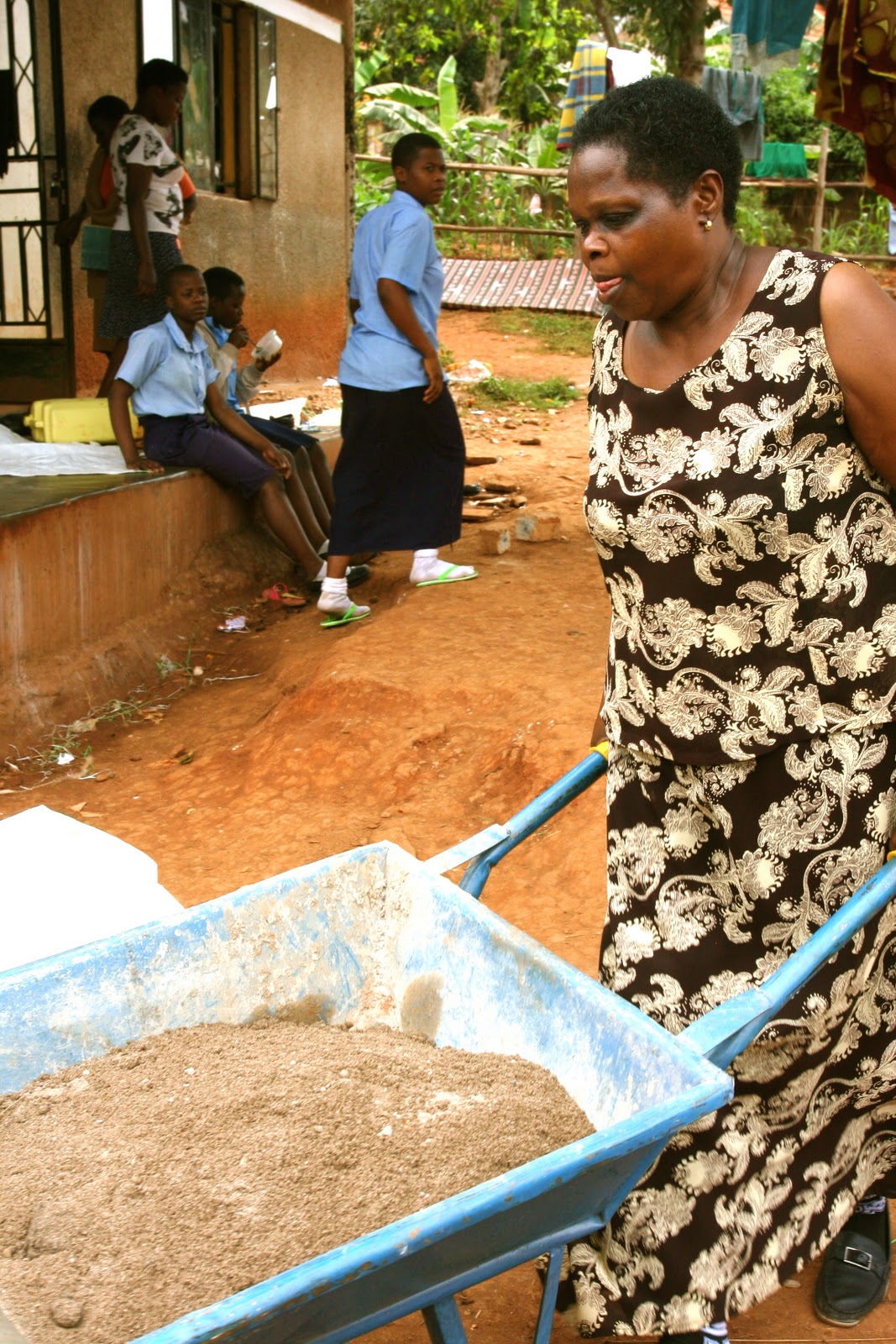
| Matilda (far right) with women from the Mukono Women's AIDS Task Force (MWATF) in Mukono, Uganda in 2011 |
Three years ago Matilda Nabukonde had never picked up a shovel. Today, she can build rainwater harvesting systems (RWH), biosand water filters (BSF) and ventilated improved pit (VIP) latrines. She offers hygiene education workshops to hundreds of people in remote rural areas in Uganda and slums of Kampala. A grandmother and caretaker, Matilda is a powerful force in the communities she serves.
We first met Matilda when she was selected to attend the Global Women’s Water Initiative (GWWI) 2008 Women and Water Training in Nairobi, Kenya. A representative of a local organization called
Uganda Community Based Association for Children’s Welfare (UCOBAC), Matilda joined us in Kenya because she wanted to launch a clean water initiative for her community. Despite having malaria, Matilda participated in all workshops; she learned to build a ferro-cement tank, harvest water off thatched roofs and collect rainwater by building a simple “purpose built” system—an affordable catchment using four posts and a small sheet of corrugated iron sheets to create a free-standing sloping surface.
After the training Matilda, along with the other 14 participant teams, received a seed grant from GWWI to construct a water and sanitation project in her community. Realizing the high cost of constructing one ferro-cement tank, Matilda and her partner invested in several small purpose-built systems that were more cost-effective and appropriate for their community. Together, they built multiple systems and trained grandmothers and orphans how to do the same. When the money ran out, Matilda raised additional funds to train and build more systems.
Matilda’s story as a WASH implementer didn't stop at the 2008 training.
In 2010, Matilda was interested in expanding the budding Water and Sanitation Hygiene (WASH) program at her organization UCOBAC. So, she attended a Biosand Water Filter training conducted by Global Women’s Water Initiative (GWWI) partner organization, A Single Drop. At the workshop, Matilda deepened her knowledge on water treatment processes to improve water quality in areas where water is abundant but not safe to drink.
Following the training, Matilda built and installed filters at UCOBAC’s newly opened health clinic serving slum dwellers in Kampala. She is currently designing a micro-business plan to expand her safe water project. Meanwhile, she also designed a more comprehensive WASH educational outreach campaign utilizing the Portable Microbiology Lab to test water for fecal contamination. She uses the results of the tests to educate the communities on the impacts of poor sanitation to convince communities that better hygiene practices, and source protection techniques are important first steps to better health.
In 2011, we responded to the needs of graduates with great promising leadership like Matilda. Along with other past Women and Water Training graduates, Matilda was invited to participate in an Advanced Training Program designed to support women like Matilda who wanted to professionalize their water and sanitation skills to become full-service WASH Trainers. As a Trainer-in Training, Matilda mentored the new Grassroots Teams, supporting them as they designed their WASH projects. She also added an additional technology—the Ventilated Improved Pit Latrine (VIP)—to her WASH toolbox. Within weeks of the training, Matilda and her team returned to the Chamanga slum and mobilized a community to build a new latrine.
Matilda gives us hope that women leaders can transform their own communities. Matilda is now equipped with multiple solutions to improve health in her community and surrounding ones. Her services are in demand in a sector where men have been traditionally sought. She sets a strong example for other women who have the opportunity to recognize that not only do they hold the solutions, they can build them.
We are inspired by Matilda and stand in solidarity with our Ugandan sister as she restores balance to the earth.
Support our work in uplifting the leadership of women like Matilda. The
ripple effect is real.