Thursday, April 22, 2010

Women and Land celebrates 1st anniversary

Happy (almost) Birthday!

The Sacred Earth Advocacy Network, a project of WEA’s Women and Land Initiative, will celebrate its first birthday this June!  Over the past year, we’ve established a thriving and growing network of advocates applying their legal, policy and business expertise in pro bono partnership with indigenous women environmental justice leaders in North America.  Our Network ensures access to critical advocacy resources — like litigation, regulatory advocacy, organizational development, and policy analysis, among others — for our indigenous women project partners, forging strategic collaborations to promote environmental health, protect sacred sites and support green energy development on tribal lands. 

Do you want to help us celebrate?

clip_image002

Join us on an Advocacy Delegation!  Our Advocacy Delegations educate and empower dynamic teams of women advocates to support communities where fossil fuel development and mineral extraction impact tribal lands and cultures.  These Delegations are unique opportunities for women advocates and activists to come together, bridging cultures and life experiences to strengthen a shared vision of sustainability and justice on earth.  Through dialogue and immersive learning,  delegates build a foundation for sustained collaborative engagement with indigenous environmental justice leaders. 

There are still spaces left in our July 2010 Delegation, Protecting Water and Tribal Culture in California, and our September 2010 Delegation, Promoting Green Energy on the Navajo Nation. 

Please contact Advocacy Director Caitlin Sislin for more information, at caitlin at womensearthalliance dot org

Video! 2010 West Africa Women and Water Training

Tuesday, April 20, 2010

The Black Mesa Mine Mess

caitlins Women Earth Alliance’s Caitlin Sislin has written on High Country News about the current opportunity for comment regarding the Peabody Western Coal Company’s water permit review process.  She writes:

“A controversial clean water permit for a coal mine complex sited at a Navajo and Hopi sacred mountain is once again up for review by the U.S. Environmental Protection Agency (EPA). Peabody Western Coal Company seeks a renewal of its water quality permit for the Black Mesa/ Kayenta Mine Complex, despite the mine's impact on water quality and local public health over several decades because of discharges of toxic heavy metals and pollutants into the water supply.
EPA invites the public to submit comments through April 30th on the previously-withdrawn National Pollution Discharge Elimination System Permit pursuant to the Clean Water Act, which requires that all industrial dischargers of wastewater obtain and maintain a permit.”
Her full article can be read here.
Will you answer Caitlin’s call to action?  Share your comments with the EPA by April 30, 2010.  You can do so here (it’s notice # NN0022179).  Or call the EPA’s John Tinger at (415) 972-3518 or by email at Tinger.John@EPA.gov

Thursday, April 8, 2010

Caitlin and WEA in the news

Women Earth Alliance’s Advocacy Director Caitlin Sislin was interviewed by VolunTourism, an organization that promotes volunteering around the world. 
voluntourism In it she says,
“Collaboration with and support of … women leaders is really an investment in health, sustainability and justice for communities.”
Read the full interview here!

One of many extraordinary women

The women involved in Women Earth Alliance are extraordinary women. Olanike Olugboji, a participant in the Global Women's Water Initiative's 2008 African Women and Water Training, has launched a new venture and has written about it on World Pulse.
picture-217
She writes, “when people’s daily needs are met, they are better able to think about the future including how to care for the environment.” We couldn’t agree more!
Click here to read her full post.

Tuesday, April 6, 2010

Solutions for Community Resilience


2009 was a banner year for Women’s Earth Alliance, there’s no doubt about it. But we knew that the wave of momentum wasn’t going to stop. In fact, here on our blog we predicted that “2010 is going to rock.”

So far it has, thanks to you. Last week we held the first Women’s Earth Alliance event of 2010 and a lively crowd of 200 people were there to listen, share, and experience.

Then, along with our Global Women’s Water Initiative (GWWI) collaborators Jan Hartsough of Crabgrass and Gemma Bulos of A Single Drop, we shared stories, photographs and a rockin’ video of our shared work in West Africa last month. We invite you to check out GWWI 2010 video by Unseen Pictures and share it with others!

Finally, one of the world’s experts on women’s involvement in environmental and social justice, Kavita Ramdas of the Global Fund for Women, spoke about what women are doing around the world to lift themselves, their families and their communities. Kavita and the Global Fund have been long supporters of GWWI and we are especially grateful for their support of our work, their compassion for women around the world, and their vision for a socially and environmentally just world.

Thanks to all that attended, sponsored, tabled, and sang!

Monday, March 1, 2010

Report from the West African Women and Water Training


Preparation Days-Global Women’s Water Initiative West African Women and Water Training
By Mariah Maggio

The latest adventure of GWWI’s Women and Water Training program in bringing powerful African women together to create solutions for water issues has begun!
The phrase, “hit the ground running” was never as appropriately applied as to how it describes the flow of our schedule when we stepped off the plane into the muggy enveloping heat of Accra, Ghana’s coastal capital city, at 9:00 p.m. on Monday night. Within two hours of stepping off the plane we were meeting with the director of Kokrobitey Institute, the venue where the Training is being held.
The first steps when we arrive in the host country are to connect with our host country partners, search for materials, coordinate logistics of travel for the participants and ensure everything is set up and operating smoothly by the time the participants arrive.
The GWWI Women and Water Trainings have a component which aims to teach the women participants about appropriate technologies through practical hands-on learning. The West African Women and Water Training gives the women the opportunity to learn one of three technologies (BioSand water filters, composting toilets, rainwater harvesting), along with the construction of Solar CooKits and water testing with the Portable Microbiology Laboratory.
So the challenge lies in locating, purchasing and delivering all of these materials in one week! The days were full, often eating the noon meal at 3:00 p.m., hot, hectic and absolutely productive! This was due in large part to the efforts, attitude and graciousness of one woman, Cecilia Mensah, who works with ProNet Accra, our on the ground partner for the Women and Water Training. She and I spent the day together, driving around Accra in her car, checking off lists and ending the day with a call to plan for the next day and say good night. Her daughter, Samuela, selflessly gave us her mother for five straight long days and we are truly grateful! Here they are below sitting down on our last day of shopping waiting for the welder to finish making our BioSand filter mold.
If you have never had the experience of having a personal shopper I suggest you try it here! Start with a list of the things you need, locate a shop that looks reputable that you pick at random or have been pointed to, get rushed out of the hot sun and into a chair, the list is whisked out of your hands and two or three young men are employed to rush around, appearing and then disappearing from sight, finding all of your materials and adjusting them when it’s not quite what you wanted. All this while you are chatting with the store keeper, sipping icy “pure water” out of a 500 ml plastic sachet and eating fresh mango or pineapple pieces out of a plastic bag (which you got from the lady walking halfway down the street who had the tray of fruit carefully balanced on her head)! I did at one point, while navigating the narrow lanes of Accra’s central market, move the 20 liter buckets we had just purchased onto the top of my head, purely out of necessity for trying to squeeze through the crowds, and what a reaction I received from the women to see this white lady carrying her goods in the African way!
I was accompanied the last day by the two other technology trainers, Ayooma A. Monica and Nasiba Sibaweh, who come from a town called Tamale, Ghana. These ladies are experts in the construction of community toilets and rainwater harvesting systems. Their efficiency in finding and buying their outstanding materials was impressive, especially when Monica essentially took over this man’s plumbing shop and had to turn people away when they asked for her assistance.
With our hired truck piled with materials we arrived at Kokrobitey Institute and got to work on preparations for the technology trainings. With the help of two local masons we enlisted, we built three BioSand filters, the foundation and cover for the composting toilet and the foundation for the rainwater harvesting tank (located at a nearby primary school that has no access to water). Nasiba is seen below forming the squat holes for the composting toilet in the wet concrete.
Also joining us for the technology preparation was Faustine Odaba, “Mama Solar,” from Nairobi, Kenya who participated in the 2008 African Women and Water Training and is here again to teach the women about the incredible potential of cooking and pasteurizing water with the sun. She painted pots and buried herself in carton boxes, working non-stop to get her materials ready.
So we are prepared and ready to receive these women and teach them the a few simple, appropriate technologies which they will be able to take back to their communities and implement!
I am humbled by all of the people I have met and observed in the week I have been here, from the woman who’s shop we frequented for construction supplies telling us she was so glad we had come because now she could pay the school fees for her daughter in secondary school to the children by the roadside selling us plastic jerricans (for carrying water) for $0.80.
Day 1-Global Women’s Water Initiative West African Women and Water Training
The anticipation and preparation has been building for a long time for this day! The first day was filled with gems, from stories to realizations and lessons learned, shared by the women participants, organizers and trainers!
A powerful tradition has started to open the GWWI Women and Water Trainings with a water ceremony allowing women carry water from their homes to the Training and together we pour our water together in one vessel, telling our stories and uniting as one from the beginning with an understanding and respect for what we have come together for during the next seven days.
We learned about the issues surrounding the water we all brought together; about how young girls are dropping out of school due to the demanding daily chore of collecting water, how water sources are shared by animals and people alike, how contaminated water caused the death of 14 children in one village in one week, how some water is abundant but taken for granted, the time and distances it takes for some women to find their daily water, how successful rainwater harvesting projects have brought clean water to school children…the stories were moving and inspiring and at times shocking, horrifying and humbling. Here are a few highlights that stuck with me from what the women shared:

  • “The only water source in this community is like Milo (the local brand of chocolate milk powder); all you need is milk and sugar to take it.”
  • “I want to use the school children as agents of change to help the community change their attitudes and behaviors.”
  • “When you start in development another issue always rises up…we were waiting for a savior to come (to help us) and it happened with the announcement of this Women and Water Training.”
  • The babies are drinking this dirty water when they are only two days old; tears almost flew from my eyes when I heard about it.”
  • “These horrible water situations are keeping women’s attention when they should be using that time to be involved in economic activity.”
  • “The people in Lagos (the capital of Nigeria) run their taps when they aren’t even using the water and they don’t think about the people 5 kilometers away that don’t have water…wastage in one area is a lack in another.”
  • “I was humbled when I learned that not only was the water coming from my household tap in the United States, but also the water in my toilet, was drinkable!”

The impact of the ceremony created in everyone a real sense of responsibility to take what they learn at this Training back to their communities to help create change for those whose stories we had just told.
The morning hours of the Training are filled with sessions on WASH (water, sanitation and hygiene) and action planning while the afternoons are devoted to practical technology training sessions. We discussed as a group, with brilliant insights and sharing from all of the women, the challenges and opportunities of African women in relation to water and the effects of climate change on water and their environments.
Today we started the afternoon sessions on a high note with Mama Solar, Faustine Odaba, giving a demonstration on solar cooking and directing the women in making their own CooKits, which they will take home with them. This dynamic, energetic and inspiring woman has been cooking with the sun for over 20 years and has motivated these women to change the way they have until now thought about the sun in their daily lives. She endears herself to an audience in the first few moments she speaks
The anthem for the day came from one of the Cameroon participants, Catherine Makane Mwengella, which we stood and sang many times to remind ourselves of the common goal of being here this week talking about women and water, challenges and solutions
“We are one. Eh Eh! We are together. We are one.”
The next few days will be intense and rich and rewarding and we are excited to channel knowledge and new skills to the women from Nigeria, Cameroon, Ghana, Togo, and Liberia to strengthen the work they are already doing on water, sanitation and hygiene in their communities to create more waves of healthy change.
And as we fall asleep tonight the rain has begun to fall here in Ghana!

Monday, February 8, 2010

On being an environmental lawyer: storytelling with a purpose

(Cross-posted from the Science and Environmental Health Network's blog)
As a young environmental attorney, I am fortunate to count Carolyn Raffensperger as one of my most trusted mentors. Carolyn’s advice and guidance deeply inform my work as the Advocacy Director for Women’s Earth Alliance, where I am building and stewarding a new pro bono legal and policy advocacy initiative to support indigenous environmental justice movements. Advocates within the Sacred Earth Advocacy Network apply their skills and expertise in collaboration with indigenous women environmental leaders, working towards justice and sustainability on issues like coal and uranium mining, power plants and waste dumps, and sacred sites desecration.
In facing the seeming intractability of these entrenched, systemic problems – the exploitation of land and concomitant decimation of culture – I have grappled with the question of how my contribution can truly make a difference. In these times I draw solace and inspiration from Carolyn’s way of working. I see her, and her colleagues at SEHN, telling the story of another paradigm. They are patiently and tirelessly describing the contours of a more just, earth-bound, peace-bringing environmental policy framework, thereby offering clear and comprehensive alternatives to our current legal regime that supports the destruction of our mother earth. Watching SEHN so effectively tell these stories – of the precautionary principle, ecological medicine, guardianship, law for the ecological age – inspires me to also be a voice for what is possible. So I asked myself about the deeper potential inherent in environmental justice advocacy; these were my thoughts, in response.
***
What is advocacy? Storytelling with a purpose, with an impact. Effective storytelling. What happens when a story is told effectively? People listen, and are moved. Change can occur.
Which stories do we tell?
To whom do we tell them?
How do we tell them?
Advocacy is the narration of a story, in an effort to convince an arbiter that one of two (or more) competing stories is the more correct, the more just. Justice is the arbiter’s choice of the story which most aligns with a shared set of values. Inherent to the achievement of justice is the telling of stories, the assurance that all who are impacted by an injustice may be heard and witnessed in the telling.
A body of law is a narrative describing a shared set of values. This larger narrative defines the parameters according to which individual stories may be told. What are the values that underlie our present system of justice, which in turn shape the way that we tell stories within that system? The maximization of economic value is the highest good; the earth is a collection of resources; people are entitled to employ those resources. What results? The commodification of the sacred. The commodification of all life. Disregard for the humanity and value of people whose lives aren’t worth as much as the land they live upon or the resources in the way of which they stand.
How do we bring about a change in these underlying values? Who are the people we must address, what are the stories we must tell, to bring about a framework of collective rights and balance on earth? Which narratives must we surface in order to alter our shared cultural narrative, moving towards sustainability, balance and peace? And how do we tell those stories when our system of justice is not yet trained to hear and digest them?
The dilemma: withdrawing our complicity from tyranny, while at the same time operating within the parameters of a system that generates and perpetuates tyranny. We recognize that the achievement of true justice is beyond the present capacity of a legal-economic system that relies on injustice in order to function. Simultaneously, we strive for justice according to the terms of that system, in order to protect the land and the people as much as possible while driving systemic change through the introduction of new narratives.
How do we defend a sacred, alive world within the confines of a system that has no concept of the sacred, which instead sees the world as a collection of non-living resources? By telling stories which say no to devastation, according to the terms of the system, and by telling stories which say yes to alternate narratives which transcend the supposed duality between economic progress and environmental sustainability.
Indigenous stories are stories about life. Community, future generations, the interconnectedness of being. The legal system tells stories of ownership of property, competition for scarce resources, separation. These are narratives in opposition to one another. Yet we cannot simply stand outside the gates and demand that the fortress tear itself down. We must enter the fortress and invite the guards and the leaders to see how the structure is crumbling, the architecture is faulty. We do this by telling stories that dance at the edges of the system’s capacity to comprehend and to act. We defer to the internal logic of the system, while laying a pathway for that logic such that it leads inevitably to a new result. We offer paradigm-shifting ideas which are nonetheless digestible and able to be assimilated by the system, like the precautionary principle. We advance ideas and take actions which are like strong shoots breaking through the concrete of man-made law, allowing natural law to meet the light and air once again.
Which stories do we tell? Stories of life.
To whom do we tell them? To those endowed with power who are able to hear.
How do we tell them? In the language of power, in the language of the heart.

Wednesday, January 13, 2010

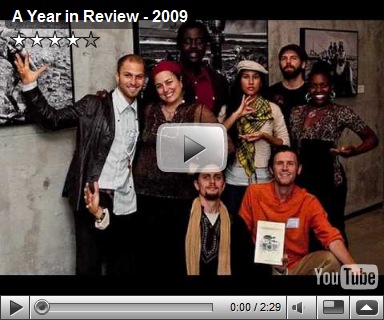
We did it! 2009 in review

Dear friends,

You are amazing.

Thanks to you, 2009 was a banner year for Women’s Earth Alliance. With a week left in 2009, we had raised 75% of our $100,000 match. By New Year's Eve we had raised $120,000. In just six weeks, 135 donors stepped forward to make this possible.
Here’s a fun slideshow of the year that changed everything. Below is just a glimpse...

In 2009, WEA…


… supported fifteen teams of African women to launch viable water projects in seven African nations through the Global Women's Water Initiative;


… convened international experts with leading Indian women farmers and organizations;


… coordinated pro bono services for indigenous environmental justice campaigns in North America;


… grew with more supporters, new goals, a larger budget, a new home, and an expanded online presence;


… and met and exceeded the $100,000 match by $20,000 in 6 weeks!

See more faces and places from 2009:

Thank you for being the wind at our backs. 2010 is going to rock.

With joy,

The Women's Earth Alliance Team

Friday, January 8, 2010

Victory for Earth and Community in the Navajo Nation

This week, an administrative law judge for the Department of Interior issued an historic decision revoking Peabody Coal Company's permit for its Black Mesa and Kayenta coal mines, effecting a precedent-setting victory in the decades-long struggle for environmental justice on Black Mesa. The decision also signals that while the Obama Administration still has its work cut out for it, it has nevertheless departed from the Bush Administration's wholesale support for fossil fuel based projects -- the December 2008 Black Mesa permit was one of Bush's many 11th hour dirty energy permits.

Judge Holt ruled that because the Department of Interior's Office of Surface Mining (OSM) failed to issue a supplemental Draft Environmental Impact Statement on the project, after Peabody revised its plans for the project, OSM's Final Environmental Impact Statement did not comply with the law. The judge thereby revoked the 2008 permit, which was based on the faulty Final EIS, and remanded it to OSM for revision.

Wahleah Johns, the co-director of Black Mesa Water Coalition -- a Women's Earth Alliance project partner -- spoke to the significance of the decision. "As a community member of Black Mesa I am grateful for Judge Holt's decision. For 40 years our sacred homelands and people have borne the brunt of coal mining impacts, from relocation to depletion of our only drinking water source. This ruling is an important step towards restorative justice for Indigenous communities who have suffered at the hands of multinational companies like Peabody Energy. This decision is also precedent-setting for all other communities who struggle with the complexities of NEPA laws and OSM procedures in regards to environmental protection."

The decision is only part of the larger effort towards healing, for land and communities. Wahleah reminds us that "we also cannot ignore that irreversible damage of coal mining industries continues on the land, water, air, people and all living things."

Women's Earth Alliance honors the tireless work of women like Wahleah Johns and her Navajo and Hopi colleagues, whose persistence in advocating for environmental sanctity and cultural sovereignty yields game-changing successes like this decision.