Showing posts with label In the News. Show all posts

Thursday, December 17, 2015

Women Climate Warriors

"I’ve got a 25-year-old son named Abe. I’ve got a 20-year-old daughter named Jessie. I would throw myself in front of a bus if it was coming at them. We all need to throw ourselves in front of this bus called climate change."

— Mindy Lubber, one of Vogue's 13 Climate Warriors 

Have you seen the absolutely stunning piece VOGUE published just as COP21 was getting underway? The articleand the profoundly beautiful photographs by Inez van Lamsweerde and Vinoodh Matadin that accompanied itfeature 13 of the formidable women leading the way on climate action.

Elizabeth Yeampierre. Photo: Vogue

Meet all 13 of these fierce women by checking out the full article here.

While we so deeply respect these women climate warriors and all they do, we also recognize that there are many more women living on the frontlines of climate change and taking action to protect their communities.  We are humbled and honored to support a number of these women and communities.

Monday, December 14, 2015

An Anthem of Climate Action and Hope

This inspirational music video from 1 Million Women, calling women from around the world to speak up about climate change and hope, is out-of-this-world amazing!

As we all look over the Paris Agreement, adopted just two days ago at COP21, and consider the message of hope it brings, this anthem is being spread around the world, creating sparks and starting discussions about how climate policies can be created and enhanceda critical message as countries decide whether to ratify the Agreement.


You can read more about 1 Million Women’s anthem and movement here.

Friday, December 11, 2015

[In the News] The First Woman Of Women: How Melinda Gates Became The World's Most Powerful Advocate For Women And Girls

We're loving this look at the life and work of Melinda Gates, co-founder and co-chair of the Bill & Melinda Gates Foundation, and a champion for the health and rights of women and girls.

Photo: Forbes
For the first decade and a half of its existence the Bill & Melinda Gates Foundation deployed its remarkable scale toward eradicating polio and malaria, and experimentation in education issues. But over the past few years Melinda Gates has embraced having her name on the letterhead of the largest-ever charitable foundation, along with the influence that comes with that. She has become the most powerful person on the planet whose singular focus is women and girls...

"When you get women in roles of leadership, we make things happen,” Gates says. “It takes us using our voice, and it also takes us making investments, huge investments, in women and girls.”
Melinda Gates has stepped up to use her voice and platform, as well as make those huge, critical investments. We are so inspired by the message this sends about the importance and global impact of investing in the leadership of women and girls.

It's through women leaders like these, believing in the women leaders on the ground, that we can change the world.

Read the full article on Forbes.

Thursday, December 3, 2015

Women are the victims of climate change – and the keys to climate action

Are you keeping an eye on the goings on at COP21 in Paris?  We are, and we're especially interested to see if/how a gendered perspective is incorporated into any (and, hopefully, every!) discussions and mechanisms for moving forward on climate action in a sustainable way.

For more of our take on COP21, read our recent post here, and for an even deeper look at why a gendered lens is so integral to developing effective solutions around climate change, check out this article from The Guardian.

Photo: The Guardian

"As the nations of the world meet in Paris to address climate change, it is critical that women play a central role in these historic negotiations. Gender equality is central to effective climate action. The world cannot afford to neglect the needs of half the world’s population, nor ignore their talents and potential in innovating solutions...

The Georgetown Institute for Women, Peace and Security recently released a new study that examines climate change as a human rights imperative, global security threat and a pervasive strain on economic stability. The report highlights how women bear severe gendered impacts of climate change – including adverse health, economic, social and physical consequences – but systematically lack equal representation in decision-making. 

The report also demonstrates – through a plethora of examples from around the world – that women are critical agents of change. Despite their vulnerabilities, women contribute to both adaptation and mitigation efforts in many parts of the world through creative, localized solutions. Numerous mediating institutions are working to provide women with opportunities to create their own sustainable businesses that also serve to reduce the global threat of climate change"
We'd love to hear what you think about COP21!

Monday, November 30, 2015

COP21: Time to Put a Cap on Global Gender Inequality

By: Katie Douglas, WEA Intern


“I will ensure this… the climate battle must be fought for, and with, women,” stated Laurent Fabius, the French Minister of Foreign Affairs and International Development. These words are Fabius’ bold commitment for the 21st session of the Conference of Parties (COP) which starts today in Paris, over which he will preside as President. For WEA and our global allies, his declaration is a real opportunity for world leaders to highlight and recommit themselves to addressing the intersectional relationship of women and the environment on an international level. The only question is whether Fabius and other decision-makers have the gumption to follow through on such promises made months ago? Or will COP21 be yet another international meeting that renders gender equality irrelevant to climate change, and creates an environmental protocol without the mechanisms to enforce it?

COP began as an international response to climate change with the Rio Earth Summit in 1992 and a commitment to reducing greenhouse gas emissions on a global scale. COP21 represents a chance for representatives from over 190 countries to cooperatively create universal agreements, all in the aim of keeping our climate below 2°C or 3.6°F. The U.S., the European Union., Russia, China, and India will largely negotiate the next 50 year agenda, as they are all among the highest emitters of greenhouse gases. However, in the past these powerhouse countries have failed to prioritize the critical role of and impacts on women in the global environmental movement.

One of the many reasons women are so incredibly impacted by the effects of climate change is due to the vital role they play in securing the natural resources that their families depend upon for survival, such as clean water, food, and fuel. Around 70% of women work in agriculture in low-income food-deficit countries, though generally women own less than 10% of the land. These women are already forced to mitigate the effects of climate change that drive soil erosion, drought, and food scarcity, and through traditional methods and knowledge these women are able to adapt successfully. The 2014 Copenhagen Consensus stated that agriculture research is the single most effective way to invest in fighting malnourishment. Combine this with the fact that agriculture is one of the biggest contributors to pollution, and the answer is straightforward: Invest in women as keepers of traditional knowledge and stewards of natural resources, provide them with the support and networks necessary to develop their community-based, sustainable solutions, and witness how the ripple of their efforts become a wave of transformation.

But one of the biggest challenges in constructing an effective international protocol is designing the mechanisms to enforce it. Past COPs have only created legally non-binding frameworks for treaty negotiations, such as the 1997 Kyoto Protocol. So long as countries can opt out of ratifying treaties that might actually impact their emission levels, there seems little prospect for any sort of enforcement on pollutant control. However, at COP21 there is hope for change as the conference’s main goal is to, for the first time, create a universal, legally binding agreement with which to effectively combat climate change. A global accord where individual countries are actually held accountable to their actions is an opportunity to create environmental protocols that invest in the women leaders who are already adapting to these changes.

For WEA and our allies around the world, we can only hope that this rare opportunity for change will not overlook women—who are critical agents in any long-term plans for our earth and future generations—and that those world leaders like Laurent Fabius will hold true to their words. Because it’s time for a protocol that doesn’t merely cap our emissions, but asks us to restructure our world to a more sustainable way of life. So let’s make a change and invest in women to invest in a sustainable future.

___________________
Further Reading:
http://www.huffingtonpost.com/laurent-fabius/taking-climate-action-for-and-with-women_b_6819596.html
http://ecowatch.com/2015/07/06/carl-pope-paris-climate-talks/

Wednesday, September 30, 2015

Small-scale organic farming can feed the world

In our work, we've seen the incredible contributions women farmers continue to make in their communities when small farms and home gardens, and their caretakers, are uplifted and respected.  This is also something we're seeing in the news more and more each daybut it's not a new idea.  Obviously, small farmers have known this simple truth for years, and apparently, so has the United Nations.  

In a 2013 report by the UN Commission on Trade and Development (UNCTAD) titled “Trade and Environment Review 2013: Wake Up Before It’s Too Late,” which included contributions from more than 60 experts around the world, UNCTAD urges us all to make some big changes in our agricultural practices.

Image: eatdrinkbetter.com
"Even as the United States government continues to push for the use of more chemically-intensive and corporate-dominated farming methods such as GMOs and monoculture-based crops, the United Nations is once against sounding the alarm about the urgent need to return to (and develop) a more sustainable, natural and organic system."
Read the full article from TECHNOLOGYWATER here, and the Trade and Environment Review 2013 report here.

Thursday, September 24, 2015

The SDGs: Landmark achievment, or a step backward?

Photo by: UN
"The 2030 agenda for sustainable development is being hailed as a landmark achievement for women’s rights and gender equality. But the adoption of the sustainable development goals (SDGs) this weekend, featuring celebrity-studded side events and thousands of observers, threatens to overshadow – and perhaps even undermine – the 20th anniversary of a much more significant global agenda for women’s rights: the Beijing declaration and platform for action.

...The objectives of Beijing were consistent with a recognition of the deeply structural nature of the inequalities experienced by women. By openly challenging austerity programmes and the impact of macroeconomic policies on women, the platform acknowledged that the neoliberal, “trade not aid” model of development was – and is – failing the majority of the world’s women. Despite the intervening impact of two global financial crises, rocketing wealth inequality, growing fundamentalisms, and a steadily worsening climate crisis, the SDGs fail even to match the Beijing agreement’s level of ambition, let alone build on it to meet our current challenges."
The Guardian takes a look at how the Sustainable Development Goals--to be adopted this weekend in New York--measure up to previous global attempts to address a myriad of issues such as gender equality.  Read more here.

Wednesday, September 2, 2015

In the News: How Climate Change Impacts Women the Most


Photo by: Rucha Chitnis
"Climate change directly impacts the ability of women to achieve their own human rights and increases gender inequalities," Eleanor Blomstrom, program director for the Women's Environment and Development Organization, told VICE News.

Despite the greater threat to women, their needs are often neglected in sustainability planning, said Nisha Onta, a gender and climate change expert with the women's rights organization WOCAN. Under UN climate change guidelines, for example, developing countries are expected to submit plans for how they will adapt to a changing climate. But those plans are often made without incorporating plans for addressing gender inequality, like the fact that a lower-class woman in Bangladesh might not be allowed to use a new water pump, which is seen a important tool for managing changing precipitation patterns.

"The needs and reality of women are lacking and the work of women is kind of taken as a given," Onta told VICE News. "[Developers say,] 'We will go in and we will have water, we will make water accessible.' How are you going to do that? Women are going to collect this water. Have they been consulted? Do they have time?"
Read more about the differentiated impacts of climate change, and how the UN hopes to address this with it's Sustainable Development Goals in this great article from VICE News.

Tuesday, August 18, 2015

A Gendered Perspective: Reflections on the MDG and the potential of the SDG

By: Katie Douglas, WEA Intern


A woman closes the door behind her and sets off into the early light of dawn. It’s the pre-monsoon season in India, and the air is thick with heat as she walks to her small kitchen garden. What began as a grant of seeds, has transformed into fertile beds of earth that are all her own. From her garden she can produce crops to both feed and financially support her family. From her garden she has been able to build alliances with other local women’s collectives around the importance of organic farming and how to improve their own self-sufficiency. From her garden her future is now one of abundance and opportunity.

This is our vision for the world because, we believe that when women thrive, communities thrive. When women are supported and resourced, they are able to lift their communities out of poverty, increase economic stability, and provide countries with sustainable practices to address and combat climate change. In light of this, the member states of the United Nation’s have been awarded a rare opportunity. As they reconstruct the Millennium Development Goals (MDG) into the Sustainable Development Goals (SDG) that will be adopted in September, these nations and participating NGOs have the potential for being the spark that makes the WEA vision for the world—a world where grassroots women leaders are heard, and their knowledge is honored and uplifted for the betterment of us all—a reality.

In 2000, the eight MDG were established by the UN to target global issues identified as being some of our world’s most pressing concerns. Over the past fifteen years, great strides have been made towards accomplishing these goals. The percentage of those living in extreme poverty has been reduced nearly by half, from 1.9 billion to 836 million. More girls than ever are now enrolled in schools, and gender equality in secondary schools in 36 developing nations is no longer just an aspiration, but a shining reality. Access to clean drinking water has also seen an increase for up to 90% of the global population. But while this incredible progress represents important steps toward creating global equality, the work of the MDG isn’t finished. We cannot regard this progress as a landmark triumph while millions of people—particularly women and girls—continue to face severe poverty, basic human rights insecurity and deep inequity.

http://www.un.org/apps/news/story.asp?NewsID=45308#.VdNmlEWrzkB

In this way, the MDG have come up short in shedding light on the intersectionality of the original goals, especially with regard to gender. In the final progress report the Secretary General of the UN, Ban Ki Moon, noted that of all the goals, gender equality and woman’s health were the most neglected. Even with an advanced education women around the world continue to earn 24% less than men. Less than 20% of government leaders in the world are women. And women in developing nations are fourteen times as likely to die as women in developed nations. When we look at this reality, we can clearly see how issues of climate change, food security, and environmental degradation continue—these are interconnected challenges existing in an ecosystem that is our world, and one challenge cannot be addressed while ignoring another.

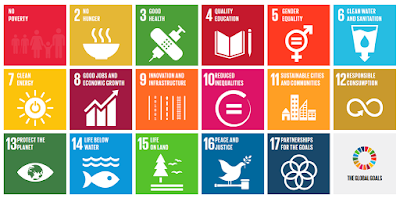
Come September, all countries that participated in the MDG must re-evaluate and submit new goals, which will become the SDG. Of the seventeen SDG declared so far, one goal directly focuses on women, while many others have the potential to impact gender in positive and critical ways. Goal #5, the aim of achieving gender equality and empowering all girls and women, is only one of many and yet impacts almost every other issue at stake. In fact, a 2014 study by the Copenhagen Consensus Center providing guidance on which of the drafted SDG targets were the best investments rated those aimed at gender equality among the highest. Still, many governments fail to invest in the leadership and capacity-building of women, they fail to increase resources to address violence against women or to ensure access to reproductive health care, and they fail to recognize the disproportionate financial and environmental burden women bear as food producers and providers, community caretakers, and natural resource stewards. The global success of women represents our greatest hope for a reconciled world, and this is something that must be taken seriously by the SDG and world nations.

http://www.un.org.me/news/1207/127/MEET-THE-PROPOSED-SUSTAINABLE-DEVELOPMENT-GOALS

The Millennium Development Goals gave us a glimpse of a world where change is possible. Through WEA’s vision of recognizing essential women’s rights, and building global networks of empowered female leaders, the Sustainable Development Goals have the potential to create a world where change truly is sustainable.


************************
Further Reading
http://iwhc.org/resource/10-red-flags-for-the-zero-draft-of-the-post-2015-development-agenda/
http://www.refinery29.com/2015/07/90279/united-nations-goals-report-gender-equality

Tuesday, July 14, 2015

Pope Francis’ Encyclical: A Message of Hope for the Earth, but Where are the Women?

By: Katie Douglas, WEA Intern

“Laudato Si” or “Praised Be to You”, Pope Francis’ recently released environmental encyclical, details how the collective actions of people are responsible for the irreversible degradation of our Earth. Subtitled “Care for Our Common Home”, the encyclical speaks boldly to the need for change to the structural injustices that drive environmental devastation. However, as the many years of WEA’s work has shown us, the Pope fails to identify one of the most prevalent social injustices that directly links to climate change: gender inequality. The question we—as women, as allies, as actors in our global community—are left with, then, is: how can humanity care for the planet while half of our population continues to fight for an equal position in ‘our common home’? 

In general, the encyclical takes an important stance as it calls for people to accept our role in and impact on the degradation of the Earth. This has been the most controversial point of the statement across religious and political spheres, with Pope Francis calling out the unrestricted rights of human “dominion”. He states that being created in God’s image does not give humanity justification for the domination of other beings, and such “dominion theory” has only encouraged the destructive exploitation of the natural world. Our greed, he says, has led to an alteration of the Earth’s natural cycles, resources and productive capabilities. To find solutions, Pope Francis stresses the need to bring impoverished and Indigenous voices to the center of environmental discussions. This is a critical steps since, as we have learned from our partners, these communities already face the damaging impacts of climate change in acute ways, even though they’re often not the drivers of this destruction.

What this landmark statement doesn’t do is highlight the fact that even within these communities, women are typically those most disproportionately impacted by environmental degradation due to their roles as mothers, food providers, and community caretakers. However, despite this overall lack attention paid to gender issues and impacts, the Pope does acknowledge that, "This sister [Mother Earth] now cries out to us because of the harm we have inflicted on her by our irresponsible use and abuse.... We have come to see ourselves as her lords and masters, entitled to plunder her at will." As we read this, we are reminded of the direct link between the body of the Earth and our bodies as women. The violence to Mother Earth that Pope Francis talks about is seen reflected in the violence experienced by women through climate change, pollution and natural resource development. At WEA, this is one of many reasons we are committed to supporting grassroots women around the world who intimately understand the interconnectedness of our place in this world as both women and stewards of the Earth, who draw strength and wisdom from our relationship with Mother Earth, and who are stepping forward and leading our communities toward a future where we co-exist in equality with one another, and in reverence of the Earth.

Gender equality must become recognized as a central point to the environmental movement, especially in a world where women living in poverty are the demographic most affected by the effects of our actions. While we applaud Pope Francis for taking this important first step in directing humanity’s attention to our historically negative impact on the environment, and for boldly calling for change where it is so very necessary, we stand firm in the knowledge that respect for our Earth and respect for women are undeniably linked.  We must understand this simple truth: we cannot have one without the other.

__________________________________
Further reading:
Mother Earth Cries Out & We Must Listen and Act Boldly--Reflecting on Pope Francis's Encyclical on the Environment
"Sister Earth Cries Out": Did Pope Francis Just Proclaim an Eco-Feminist Theology?

Thursday, August 28, 2014

WEA Grassroots Partner Celebrated as "Woman Warrior"

Check out this great article on grassroots women warriors--including a WEA partner!--who are protecting their lands and communities against #environmental destruction.

Suryamani Bhagat is a brave forest activist and #Indigenous leader of the Jharkhand Save the Forest Movement in #India, and has mobilized a forest watch committee to stop illegal forest destruction in her state.

WEA partnered with Jharkhand Save the Forest Movement, part of the Bindrai Institute of Research Study and Action, over the last year to support their efforts to enhance decision-making power of adivasi women, who are crucial custodians of forests and #biodiversity.


Tuesday, August 26, 2014

Happy Women's Equality Day!

Happy Women's Equality Day here in the U.S.! While this day commemorates the passage of women's right to vote, here at WEA, women's equality also means honoring the knowledge, expertise and leadership of grassroots women around the world who are standing strong for our communities, environment and futures.

What does Women's Equality Day mean to you?


Wednesday, July 2, 2014

Environmental Injustice: Communities on the Frontlines

One of the key concerns in much of WEA's work is around the continued presence of environmental racism and environmental violence in Indigenous communities around the world, and how that presence impacts women in particular.  We see this appear in many ways: the siting of hazardous waste facilities, American corporations' sale and exportation of poisonous pesticides otherwise banned in the U.S., mining and exploitation on Indigenous lands, and much more.

To illustrate this point, here's an infographic specifically highlighting the impact of hazardous and toxic waste facilities, and abandoned or working mines in racially, ethnically and socially underrepresented communities in the United States.


Wednesday, May 28, 2014

[Did You Know?] Climate Change Impacts on Navajo Nation

In it's recent report, Climate Change Impacts in the United States, the U.S. Global Change Research Program found that "Indigenous communities in the Southwest are more vulnerable to climate change than ever before.  30% of the Navajo population not served by municipal systems like water will face even greater challenges with increased threats from: drought, higher temperatures and severe storms."


Wednesday, January 29, 2014

Congress Passes Bi-Partisan Bill with $50 Million Increase for WASH

By Gemma Bulos, GWWI Director

Last year, I was honored to present GWWI’s work at the historical launch of USAID's Water and Sanitation Development Strategy alongside Senator Richard Durbin, Senator Chris Coons, Congressman Earl Blumenauer, Congressman Ted Poe and USAID Administrator Rajiv Shah and USAID Global Water Coordinator Chris Holmes.

This was a significant milestone for USAID as it shows their commitment to prioritize WASH as a one of their key strategies to provide international aid to uplift communities around the globe.

Yesterday it was announced that on January 17, President Obama signed into law a sweeping, bipartisan $1.1 trillion spending bill that increases funding for safe drinking water in developing countries by over 20 percent.

The Omnibus Appropriations bill, which includes the State and Foreign Operations budget for the Department of State and the United States Agency for International Development (USAID), provides an increase of $50 million for safe drinking water, sanitation, and hygiene (WASH) projects, potentially providing water and sanitation to over three million people in Africa, Asia, and Latin America over the course of the coming fiscal year. (WASH Advocates)

John Oldfield, CEO of WASH Advocates, noted, "Politics stops at water, and this is clearly one issue on which both Republicans and Democrats can agree.”


Go to 7:07 for Gemma’s GWWI presentation

It has always been my belief that water is the master equalizer in that the smallest plant and the richest man are equal in that we all need it to survive. My past work as the Founder of A Single Drop and now as the Director of the Global Women’s Water Initiative was based on the premise that because our shared need for water transcends politics, religion, etc, it’s a place where we all agree and therefore a platform where we can start a conversation and even collaborate.

All the WASH programs that we have designed have focused on uniting communities, engaging all the relevant stakeholders and supporting collaborative community-driven efforts to resolve their own water issues. It’s a thrill to see the US government recognize the need for these kinds of strategies to address the most pressing issues of this century.

Like GWWI on Facebook
Follow GWWI on Twitter
Follow Gemma on Twitter

Monday, December 23, 2013

Recognizing Women's Leadership to Mitigate Conflict & Climate Change

Blog post by: Rucha Chitnis, Director of Grantmaking (@ruchachitnis)

Manipur, a state in India bordering Burma, is part of the "Seven Sisters" -- seven contiguous states in Northeastern India, known for their rich ethnic diversity, bountiful natural resources, as well as political conflict and turmoil.  For over 50 years now, Manipur has been bound by the controversial Armed Forces Special Powers Act, which grants extraordinary powers to the Indian armed forces to suppress separatist insurgencies in the region.  This act has been fiercely criticized by human rights groups for its abuse by the Indian Army through arbitrary killings, torture, enforced disappearances and violence perpetrated against women.


Northeastern states, like Manipur, are also ecologically fragile lands, and are part of the Eastern Himalayan tracts that are considered a major biodiversity hotspot.  In recent times, big dams, mining and oil exploration activities and rapid forest degradation have deeply concerned environmental advocates, especially as the impacts of climate change are worsening economic and food security in the region.


Women play a crucial role in all socio-economic aspects Manipur and are key food producers.
Earlier this year, I traveled to Manipur to learn about the emerging priorities and strategies of women's groups to promote sustainable development and livelihoods in the midst of political tensions, militarism and ecological vulnerabilities. Our grantee partners in Manipur, Rural Women Upliftment Society (RWUS) and Weaker Sections Development Council, (WSDC) are using holistic multi-pronged approaches to promote food security, advocate for peace and security, and raise awareness on climate change among vulnerable Indigenous hill tribes.

A women's group in Chandel district that is growing and processing organic turmeric as a collective

Ignored by History: Recognizing Manipuri Women's Role in Social Movements

Shangnaidar Shangdar, leader of WSDC, is passionate about highlighting the role of women in Manipur to forge long-term movements to bring peace and security in the regionHistorically women in Manipur have also led brave social movements, including fighting British imperialism. Known as Nupi lan, or women’s war, women in Manipur led a successful brave agitation in 1939 protesting exploitative British free trade laws that precipitously raised the price of rice by increasing exports, and adversely affected local communities and small traders through food shortages. Sadly, these crucial resistances by Manipuri women are largely invisible and unknown in mainstream India's historical chronicles.

During my visit, Shangnaidar took me to Ima Keithel, also known as Mother's Market, which is a sprawling market in the capital city of Imphal, where all stalls are run by women. Mother's Market stands out as a proud, unique heritage of Manipur, which speaks powerfully to the crucial role women play in socio-eonomic realms here.

These women are promoting inter-tribal peace building efforts & are training women affected
by gun violence and HIV/AIDS on weaving and other livelihood generation activities


WSDC raises awareness among women widowed by gun violence and HIV/AIDS on their rights and entitlements from the state, including widow pension and food security provisions. They are also training communities on organic farming practices, raising awareness on the rights of small farmers, and are supplementing women’s income through diversifying their livelihoods by soap making, weaving and artisanal bamboo products.

Both of our grantee partners recognize that empowering women, and promoting their political, social and cultural rights, is crucial for peace building and strengthening civil society and ushering sustainable development.  WSDC and RWUS also organize trainings and educational activities to promote women’s role in governance and in conflict resolution.

Recently RWUS conducted several workshops to raise awareness on climate change among women in the hilly tribal areas of Churachandpur, the largest district of the Manipur.

Being largely an agrarian economy, climate change is affecting the economy of the state over time. Unnoticed by the policy makers, one of the major victims of climate change have been the marginalized women of the society, who have always suffered for being financially weak and also for lacking the power of decision making in the society.”  RWUS further notes that climate change is affecting water availability in the region and is making agriculture increasingly harder for small farmers.
A small grant from WEA is enabling RWUS to organize women in 15 vulnerable tribal villages affected by climate change.  With WEA's support, RWUS is raising awareness on the crucial need to protect Manipur’s forest biodiversity and other natural resources, and the key role women can play in protecting their environment and promoting sustainable livelihoods.

The impact of climate change has already forced many to abandon their existing professions and search for alternatives. Many women particularly youth are forced to move out of home to seek employment elsewhere because agriculture has become unsustainable,” notes the RWUS team.
In the near future, RWUS plans to organize workshops for women on dams and mining and how they impact Indigenous livelihoods, culture and way of being, as well as continue their assessment on the impact of climate change on women and promote women’s role as environmental advocates.

RWUS shares how one of the participants of the climate change training called Sangpui, a mother of three, began taking personal responsibility to protect the environment. Sangpui went on to plant over 1000 saplings and is slowly recognizing how forest degradation affects her community. “Each time I plant a tree, I realize I am contributing to sustain the livelihood of forest dependents, like me,” she says.


Thursday, November 14, 2013

Weathering the Storm: Gender Dimensions of Haiyan & Climate Change


Rucha Chitnis: Director of Grantmaking, Women's Earth Alliance @ruchachitnis

As Philippines grasps the devastating scale of the destruction unleashed by Super Typhoon Haiyan, the global community must prioritize those who are being disproportionately impacted by this natural disaster—women and girls.  The typhoon has impacted over 11 million people and aid gridlocks are paralyzing relief operations with poor access and communications.  As aid and relief agencies scramble to deliver critical services to survivors, it is crucial to keep in mind the gender dimensions of natural disasters, and existing inequalities facing girls and women.

Why Gender Lens Is Crucial

Climate change and natural disasters are not gender neutral:  Women and girls face multi-faceted discrimination and inequalities globally.  Prevailing social norms – which leave women economically and culturally vulnerable in the best of times – impede women’s ability to recover from natural disasters and receive adequate support for their unique health, safety and other well-being needs.  According to a report, Because I am A Girl, women and children are 14 times more likely to die in disasters than men.

Escalation of violence against women and girls:  Disasters, such as the Super Typhoon, create crippling social breakdowns, including in law enforcement services. A study of the Center for Human Rights and Global Justice at NYU School of Law conducted in four camps of internally displaced persons around Port-au-Prince, Haiti, revealed alarming data: Of the households surveyed 14% “reported that, since the earthquake, one or more members of their household had been victimized by rape or unwanted touching or both.” The typhoon in Philippines is no different, and human rights groups are raising concerns of escalating violence against women and girls, including risks of trafficking, forced marriages and rape.

Lack of adequate healthcare: UNFPA estimates that nearly 200,000 pregnant women need additional support, with stories surfacing of women giving birth amidst the rubble. Approximately 40% of women in the Philippines deliver at home, so there is an urgent need for groups like UNFPA to provide clean delivery kits to partners and midwives. 

Women's groups in Manipur are raising awareness on climate change
and promoting women's role in governance
Way Forward: What We Are Learning From Women’s Groups  

Around the world, women’s groups, solidarity networks and movements are demanding urgent climate action and a re-examination of a carbon-fueled development paradigm. Indigenous and rural women recognize that as mothers, caregivers, food producers, water and environmental stewards, they bear a disproportionate burden from these climate-induced disasters.  Here are some holistic ways in which our grassroots partners and allies in South Asia and beyond are taking proactive steps to build community resiliency.

Empowering Women & Promoting Rights:  HIMANWANTI, Women’s Earth Alliance partner in Nepal, works to promote the rights of rural women in forest and natural resource management.  HIMAWANTI believes that it is crucial to strengthen the role of women in the management and protection of biodiversity, as well as promote equitable access to natural resources and benefits generated from its use.  They are also strengthening political literacy to build networks of healthy, conscious and empowered women throughout Nepal. 

Ending Climate Denial and Demanding Accountability to Grassroots Women:  A diverse gathering of women leaders from around the world in New York this year urged the world’s governments to make commitments to avoid a global temperature rise of 2.0 C degrees. Women also reminded the global community that citizens in industrialized nations have a responsibility to educate themselves and their worldviews and to divest from dirty fossil fuel developments, such as Tar Sands and fracking. Click here to read this powerful International Women’s Earth and Climate Summit declaration.

Promoting Women’s Decision-making:  Our partner in Manipur, India, Rural Women Upliftment Society works to holistically build the leadership of indigenous women.  RWUS promotes women’s participation in local governance, and provides capacity building support in sustainable agriculture and livelihoods to strengthen women’s food and economic security in the face of climate variability.

Respecting Women’s Knowledge and Expertise:  Across the Global South, women farmers and Indigenous women’s networks and movements are positioning themselves as knowledge holders, equipped with a powerful agency to build holistic climate solutions.  Women farmers are also seed savers, who have immense knowledge about native food crops, such as drought-resistant millet varieties that thrive in dry land areas and need little water for cultivation.

Women farmers in Karnataka are planting drought-resistant millets
and raising awareness on climate change through street theater and other activities 
Our partner in India, the GREEN Foundation, believes it is vital to value women’s knowledge and expertise to promote food security and build community resiliency. GREEN is mentoring a group of women farmers in a drought-prone region in Karnataka in community radio production, where they will share information on climate change, early warning weather signs and promote sustainable agriculture as an important strategy to promote food security and healthy ecosystems.

There is an undeniable link between existing gender inequalities and how they exacerbate women’s vulnerabilities in the face of climate change and natural disasters. Women’s rights advocates note that it is crucial to include women’s leadership and decision-making in all aspects of climate change and disaster management program implementations and policies.  Women’s participation is key in not only post disaster recovery efforts but also in proactive disaster prevention and climate mitigation and adaptation efforts.  If you wish to donate to grassroots women’s groups that are leading recovery efforts for Typhoon Haiyan, consider donating to the Global Fund for Women. Also here’s an appeal with a list of organizations to support Indigenous peoples affected by this crisis.

Friday, May 17, 2013

USAID Features GWWI Director, Gemma Bulos at the Water Strategy Launch in Washington, DC

We are thrilled to announce that Gemma Bulos, Director of the Global Women's Water Initiative will be speaking at the launch of USAID's first ever Water and Development Strategy on Tuesday, May 21 in Washington DC!  See press release below.

Also, on the following day Wed, May 22, USAID will be hosting a special event featuring Gemma: "Women's Entrepreneurship and Leadership in Water and Sanitation. Gemma will share how the Global Women's Water Initiative is building a cadre of women WASH trainers versed in a holistic water, sanitation and hygiene strategies (WASH). See more info here.

FOR Immediate Release:

USAID Releases its First Water and Development Strategy


May 21, Washington, DC

Join U.S. Agency for International Development (USAID) Administrator Rajiv Shah, Senator Richard Durbin, Congressman Earl Blumenauer and Congressman Ted Poe as they release the U.S. Government’s first Water and Development Strategy. Also presenting will be Gemma Bulos, Director of the Global Women's Water Initiative to speak on the importance of building capacity of women in the water sector.

The strategy is already receiving praise from lawmakers on both sides of the aisle, and strongly positions water as foundational to sustainable progress across many other vital development challenges including health, food, education, HIV, gender equality, and climate change. It will increase both the amount and the effectiveness of foreign assistance in the safe drinking water and sanitation sector, and serve as an important benchmark going forward for how we target our foreign aid.

This strategy will address global water-related development needs by providing a clear understanding of USAID's approach to water programming, emphasizing how sustainable use of water is critical to saving lives.

WHEN: Tuesday, May 21, 2013 10 a.m. – 11 a.m.
WHERE: Kennedy Caucus Room Russell Senate Office Building Washington, DC

To follow and discuss the event on Twitter, use hashtag: #WaterStrategy