Showing posts with label policy. Show all posts

Thursday, September 24, 2015

The SDGs: Landmark achievment, or a step backward?

Photo by: UN
"The 2030 agenda for sustainable development is being hailed as a landmark achievement for women’s rights and gender equality. But the adoption of the sustainable development goals (SDGs) this weekend, featuring celebrity-studded side events and thousands of observers, threatens to overshadow – and perhaps even undermine – the 20th anniversary of a much more significant global agenda for women’s rights: the Beijing declaration and platform for action.

...The objectives of Beijing were consistent with a recognition of the deeply structural nature of the inequalities experienced by women. By openly challenging austerity programmes and the impact of macroeconomic policies on women, the platform acknowledged that the neoliberal, “trade not aid” model of development was – and is – failing the majority of the world’s women. Despite the intervening impact of two global financial crises, rocketing wealth inequality, growing fundamentalisms, and a steadily worsening climate crisis, the SDGs fail even to match the Beijing agreement’s level of ambition, let alone build on it to meet our current challenges."
The Guardian takes a look at how the Sustainable Development Goals--to be adopted this weekend in New York--measure up to previous global attempts to address a myriad of issues such as gender equality.  Read more here.

Tuesday, August 18, 2015

A Gendered Perspective: Reflections on the MDG and the potential of the SDG

By: Katie Douglas, WEA Intern


A woman closes the door behind her and sets off into the early light of dawn. It’s the pre-monsoon season in India, and the air is thick with heat as she walks to her small kitchen garden. What began as a grant of seeds, has transformed into fertile beds of earth that are all her own. From her garden she can produce crops to both feed and financially support her family. From her garden she has been able to build alliances with other local women’s collectives around the importance of organic farming and how to improve their own self-sufficiency. From her garden her future is now one of abundance and opportunity.

This is our vision for the world because, we believe that when women thrive, communities thrive. When women are supported and resourced, they are able to lift their communities out of poverty, increase economic stability, and provide countries with sustainable practices to address and combat climate change. In light of this, the member states of the United Nation’s have been awarded a rare opportunity. As they reconstruct the Millennium Development Goals (MDG) into the Sustainable Development Goals (SDG) that will be adopted in September, these nations and participating NGOs have the potential for being the spark that makes the WEA vision for the world—a world where grassroots women leaders are heard, and their knowledge is honored and uplifted for the betterment of us all—a reality.

In 2000, the eight MDG were established by the UN to target global issues identified as being some of our world’s most pressing concerns. Over the past fifteen years, great strides have been made towards accomplishing these goals. The percentage of those living in extreme poverty has been reduced nearly by half, from 1.9 billion to 836 million. More girls than ever are now enrolled in schools, and gender equality in secondary schools in 36 developing nations is no longer just an aspiration, but a shining reality. Access to clean drinking water has also seen an increase for up to 90% of the global population. But while this incredible progress represents important steps toward creating global equality, the work of the MDG isn’t finished. We cannot regard this progress as a landmark triumph while millions of people—particularly women and girls—continue to face severe poverty, basic human rights insecurity and deep inequity.

http://www.un.org/apps/news/story.asp?NewsID=45308#.VdNmlEWrzkB

In this way, the MDG have come up short in shedding light on the intersectionality of the original goals, especially with regard to gender. In the final progress report the Secretary General of the UN, Ban Ki Moon, noted that of all the goals, gender equality and woman’s health were the most neglected. Even with an advanced education women around the world continue to earn 24% less than men. Less than 20% of government leaders in the world are women. And women in developing nations are fourteen times as likely to die as women in developed nations. When we look at this reality, we can clearly see how issues of climate change, food security, and environmental degradation continue—these are interconnected challenges existing in an ecosystem that is our world, and one challenge cannot be addressed while ignoring another.

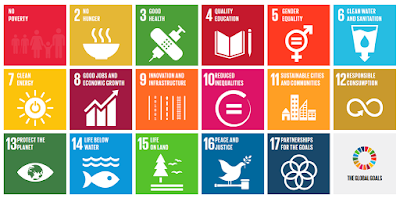
Come September, all countries that participated in the MDG must re-evaluate and submit new goals, which will become the SDG. Of the seventeen SDG declared so far, one goal directly focuses on women, while many others have the potential to impact gender in positive and critical ways. Goal #5, the aim of achieving gender equality and empowering all girls and women, is only one of many and yet impacts almost every other issue at stake. In fact, a 2014 study by the Copenhagen Consensus Center providing guidance on which of the drafted SDG targets were the best investments rated those aimed at gender equality among the highest. Still, many governments fail to invest in the leadership and capacity-building of women, they fail to increase resources to address violence against women or to ensure access to reproductive health care, and they fail to recognize the disproportionate financial and environmental burden women bear as food producers and providers, community caretakers, and natural resource stewards. The global success of women represents our greatest hope for a reconciled world, and this is something that must be taken seriously by the SDG and world nations.

http://www.un.org.me/news/1207/127/MEET-THE-PROPOSED-SUSTAINABLE-DEVELOPMENT-GOALS

The Millennium Development Goals gave us a glimpse of a world where change is possible. Through WEA’s vision of recognizing essential women’s rights, and building global networks of empowered female leaders, the Sustainable Development Goals have the potential to create a world where change truly is sustainable.


************************
Further Reading
http://iwhc.org/resource/10-red-flags-for-the-zero-draft-of-the-post-2015-development-agenda/
http://www.refinery29.com/2015/07/90279/united-nations-goals-report-gender-equality

Wednesday, January 29, 2014

Congress Passes Bi-Partisan Bill with $50 Million Increase for WASH

By Gemma Bulos, GWWI Director

Last year, I was honored to present GWWI’s work at the historical launch of USAID's Water and Sanitation Development Strategy alongside Senator Richard Durbin, Senator Chris Coons, Congressman Earl Blumenauer, Congressman Ted Poe and USAID Administrator Rajiv Shah and USAID Global Water Coordinator Chris Holmes.

This was a significant milestone for USAID as it shows their commitment to prioritize WASH as a one of their key strategies to provide international aid to uplift communities around the globe.

Yesterday it was announced that on January 17, President Obama signed into law a sweeping, bipartisan $1.1 trillion spending bill that increases funding for safe drinking water in developing countries by over 20 percent.

The Omnibus Appropriations bill, which includes the State and Foreign Operations budget for the Department of State and the United States Agency for International Development (USAID), provides an increase of $50 million for safe drinking water, sanitation, and hygiene (WASH) projects, potentially providing water and sanitation to over three million people in Africa, Asia, and Latin America over the course of the coming fiscal year. (WASH Advocates)

John Oldfield, CEO of WASH Advocates, noted, "Politics stops at water, and this is clearly one issue on which both Republicans and Democrats can agree.”


Go to 7:07 for Gemma’s GWWI presentation

It has always been my belief that water is the master equalizer in that the smallest plant and the richest man are equal in that we all need it to survive. My past work as the Founder of A Single Drop and now as the Director of the Global Women’s Water Initiative was based on the premise that because our shared need for water transcends politics, religion, etc, it’s a place where we all agree and therefore a platform where we can start a conversation and even collaborate.

All the WASH programs that we have designed have focused on uniting communities, engaging all the relevant stakeholders and supporting collaborative community-driven efforts to resolve their own water issues. It’s a thrill to see the US government recognize the need for these kinds of strategies to address the most pressing issues of this century.

Like GWWI on Facebook
Follow GWWI on Twitter
Follow Gemma on Twitter

Wednesday, June 20, 2012

GWWI: Women and Water on Wednesdays: Kenya to Enact Rainwater Harvesting Act - Great Opportunity for GWWI Grads

Posted by Gemma Bulos
Great news for GWWI Kenya Grads! According to the Kenyan Ministry of Water Deputy Director of Water Resources Juma Omondi, the Kenya Rainwater Harvesting Act
will be enacted by the end of 2012. The law will advocate for the integration of household and industrial rainwater harvesting (RWH) technologies. And Nairobi will join the likes of Indian cities New Delhi, Mumbai and Bangalore requiring new homes to have rainwater harvesting infrastructure before the building can be approved.
Building roof catchment and ferro cement
for school

How does this open opportunities for graduates of the Global Women's Water Initiative Training Program?

GWWI teaches women to build simple water and sanitation technologies to provide clean water in their communities. One of the technologies most in demand is rainwater harvesting and safe water storage. 

Women in Africa and in other developing regions can sometimes walk up to 8 hours per day looking for water. On top of that, they have to carry up to 44lbs of water on their heads, shoulders and backs for use at home for cooking, drinking and washing. Collecting rainwater and storing it for future use can alleviate some, if not all of that burden depending on the rainfall and the size of the storage tank.

Rose makes an interlocking stabilized
soil block (IS
This past year, some GWWI graduates learned to build roof catchments and a storage tank made out of interlocking stabilized blocks (ISSB). The ISSB tank is a relatively new technology that is now gaining traction in Kenya and the East Africa region because it costs less and is more durable than the other alternatives like a polytank (plastic) and ferrocement tank. The ISSB is made out of marram (orange clay/soil), sand, a little cement and water. This mixture is compressed in a block making machine that requires no electricity just human sweat. It's also manufactured in Nairobi (Kenya's capital city), further keeping the construction and material costs down. Most simple brick making techniques require drying in the sun, whereas the ISSB is ready for use in 24 hours regardless of the weather. What makes this technology cutting edge is the shape of the bricks. Unlike traditional bricks that are flat and rectangular in shape, the ISSB bricks are shaped to interlock like a puzzle, which reduces the amount of cement for bonding and creates a stronger foundation and structure for the tank. 
Rounded ISSBs for tanks

With this new policy development, GWWI grads can potentially provide professional construction and education services to meet the water needs of their communities. GWWI is excited to support our graduates to lead the way towards introducing cutting edge technologies that use local materials, require no electricity and can be built by WOMEN!