Showing posts with label gender equality. Show all posts

Thursday, September 24, 2015

The SDGs: Landmark achievment, or a step backward?

Photo by: UN
"The 2030 agenda for sustainable development is being hailed as a landmark achievement for women’s rights and gender equality. But the adoption of the sustainable development goals (SDGs) this weekend, featuring celebrity-studded side events and thousands of observers, threatens to overshadow – and perhaps even undermine – the 20th anniversary of a much more significant global agenda for women’s rights: the Beijing declaration and platform for action.

...The objectives of Beijing were consistent with a recognition of the deeply structural nature of the inequalities experienced by women. By openly challenging austerity programmes and the impact of macroeconomic policies on women, the platform acknowledged that the neoliberal, “trade not aid” model of development was – and is – failing the majority of the world’s women. Despite the intervening impact of two global financial crises, rocketing wealth inequality, growing fundamentalisms, and a steadily worsening climate crisis, the SDGs fail even to match the Beijing agreement’s level of ambition, let alone build on it to meet our current challenges."
The Guardian takes a look at how the Sustainable Development Goals--to be adopted this weekend in New York--measure up to previous global attempts to address a myriad of issues such as gender equality.  Read more here.

Tuesday, August 18, 2015

A Gendered Perspective: Reflections on the MDG and the potential of the SDG

By: Katie Douglas, WEA Intern


A woman closes the door behind her and sets off into the early light of dawn. It’s the pre-monsoon season in India, and the air is thick with heat as she walks to her small kitchen garden. What began as a grant of seeds, has transformed into fertile beds of earth that are all her own. From her garden she can produce crops to both feed and financially support her family. From her garden she has been able to build alliances with other local women’s collectives around the importance of organic farming and how to improve their own self-sufficiency. From her garden her future is now one of abundance and opportunity.

This is our vision for the world because, we believe that when women thrive, communities thrive. When women are supported and resourced, they are able to lift their communities out of poverty, increase economic stability, and provide countries with sustainable practices to address and combat climate change. In light of this, the member states of the United Nation’s have been awarded a rare opportunity. As they reconstruct the Millennium Development Goals (MDG) into the Sustainable Development Goals (SDG) that will be adopted in September, these nations and participating NGOs have the potential for being the spark that makes the WEA vision for the world—a world where grassroots women leaders are heard, and their knowledge is honored and uplifted for the betterment of us all—a reality.

In 2000, the eight MDG were established by the UN to target global issues identified as being some of our world’s most pressing concerns. Over the past fifteen years, great strides have been made towards accomplishing these goals. The percentage of those living in extreme poverty has been reduced nearly by half, from 1.9 billion to 836 million. More girls than ever are now enrolled in schools, and gender equality in secondary schools in 36 developing nations is no longer just an aspiration, but a shining reality. Access to clean drinking water has also seen an increase for up to 90% of the global population. But while this incredible progress represents important steps toward creating global equality, the work of the MDG isn’t finished. We cannot regard this progress as a landmark triumph while millions of people—particularly women and girls—continue to face severe poverty, basic human rights insecurity and deep inequity.

http://www.un.org/apps/news/story.asp?NewsID=45308#.VdNmlEWrzkB

In this way, the MDG have come up short in shedding light on the intersectionality of the original goals, especially with regard to gender. In the final progress report the Secretary General of the UN, Ban Ki Moon, noted that of all the goals, gender equality and woman’s health were the most neglected. Even with an advanced education women around the world continue to earn 24% less than men. Less than 20% of government leaders in the world are women. And women in developing nations are fourteen times as likely to die as women in developed nations. When we look at this reality, we can clearly see how issues of climate change, food security, and environmental degradation continue—these are interconnected challenges existing in an ecosystem that is our world, and one challenge cannot be addressed while ignoring another.

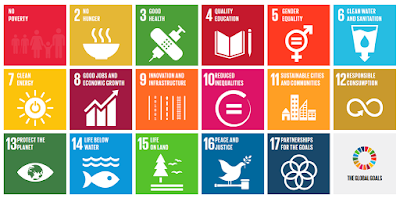
Come September, all countries that participated in the MDG must re-evaluate and submit new goals, which will become the SDG. Of the seventeen SDG declared so far, one goal directly focuses on women, while many others have the potential to impact gender in positive and critical ways. Goal #5, the aim of achieving gender equality and empowering all girls and women, is only one of many and yet impacts almost every other issue at stake. In fact, a 2014 study by the Copenhagen Consensus Center providing guidance on which of the drafted SDG targets were the best investments rated those aimed at gender equality among the highest. Still, many governments fail to invest in the leadership and capacity-building of women, they fail to increase resources to address violence against women or to ensure access to reproductive health care, and they fail to recognize the disproportionate financial and environmental burden women bear as food producers and providers, community caretakers, and natural resource stewards. The global success of women represents our greatest hope for a reconciled world, and this is something that must be taken seriously by the SDG and world nations.

http://www.un.org.me/news/1207/127/MEET-THE-PROPOSED-SUSTAINABLE-DEVELOPMENT-GOALS

The Millennium Development Goals gave us a glimpse of a world where change is possible. Through WEA’s vision of recognizing essential women’s rights, and building global networks of empowered female leaders, the Sustainable Development Goals have the potential to create a world where change truly is sustainable.


************************
Further Reading
http://iwhc.org/resource/10-red-flags-for-the-zero-draft-of-the-post-2015-development-agenda/
http://www.refinery29.com/2015/07/90279/united-nations-goals-report-gender-equality

Tuesday, July 14, 2015

Pope Francis’ Encyclical: A Message of Hope for the Earth, but Where are the Women?

By: Katie Douglas, WEA Intern

“Laudato Si” or “Praised Be to You”, Pope Francis’ recently released environmental encyclical, details how the collective actions of people are responsible for the irreversible degradation of our Earth. Subtitled “Care for Our Common Home”, the encyclical speaks boldly to the need for change to the structural injustices that drive environmental devastation. However, as the many years of WEA’s work has shown us, the Pope fails to identify one of the most prevalent social injustices that directly links to climate change: gender inequality. The question we—as women, as allies, as actors in our global community—are left with, then, is: how can humanity care for the planet while half of our population continues to fight for an equal position in ‘our common home’? 

In general, the encyclical takes an important stance as it calls for people to accept our role in and impact on the degradation of the Earth. This has been the most controversial point of the statement across religious and political spheres, with Pope Francis calling out the unrestricted rights of human “dominion”. He states that being created in God’s image does not give humanity justification for the domination of other beings, and such “dominion theory” has only encouraged the destructive exploitation of the natural world. Our greed, he says, has led to an alteration of the Earth’s natural cycles, resources and productive capabilities. To find solutions, Pope Francis stresses the need to bring impoverished and Indigenous voices to the center of environmental discussions. This is a critical steps since, as we have learned from our partners, these communities already face the damaging impacts of climate change in acute ways, even though they’re often not the drivers of this destruction.

What this landmark statement doesn’t do is highlight the fact that even within these communities, women are typically those most disproportionately impacted by environmental degradation due to their roles as mothers, food providers, and community caretakers. However, despite this overall lack attention paid to gender issues and impacts, the Pope does acknowledge that, "This sister [Mother Earth] now cries out to us because of the harm we have inflicted on her by our irresponsible use and abuse.... We have come to see ourselves as her lords and masters, entitled to plunder her at will." As we read this, we are reminded of the direct link between the body of the Earth and our bodies as women. The violence to Mother Earth that Pope Francis talks about is seen reflected in the violence experienced by women through climate change, pollution and natural resource development. At WEA, this is one of many reasons we are committed to supporting grassroots women around the world who intimately understand the interconnectedness of our place in this world as both women and stewards of the Earth, who draw strength and wisdom from our relationship with Mother Earth, and who are stepping forward and leading our communities toward a future where we co-exist in equality with one another, and in reverence of the Earth.

Gender equality must become recognized as a central point to the environmental movement, especially in a world where women living in poverty are the demographic most affected by the effects of our actions. While we applaud Pope Francis for taking this important first step in directing humanity’s attention to our historically negative impact on the environment, and for boldly calling for change where it is so very necessary, we stand firm in the knowledge that respect for our Earth and respect for women are undeniably linked.  We must understand this simple truth: we cannot have one without the other.

__________________________________
Further reading:
Mother Earth Cries Out & We Must Listen and Act Boldly--Reflecting on Pope Francis's Encyclical on the Environment
"Sister Earth Cries Out": Did Pope Francis Just Proclaim an Eco-Feminist Theology?

Tuesday, August 26, 2014

Happy Women's Equality Day!

Happy Women's Equality Day here in the U.S.! While this day commemorates the passage of women's right to vote, here at WEA, women's equality also means honoring the knowledge, expertise and leadership of grassroots women around the world who are standing strong for our communities, environment and futures.

What does Women's Equality Day mean to you?


Thursday, November 14, 2013

Weathering the Storm: Gender Dimensions of Haiyan & Climate Change


Rucha Chitnis: Director of Grantmaking, Women's Earth Alliance @ruchachitnis

As Philippines grasps the devastating scale of the destruction unleashed by Super Typhoon Haiyan, the global community must prioritize those who are being disproportionately impacted by this natural disaster—women and girls.  The typhoon has impacted over 11 million people and aid gridlocks are paralyzing relief operations with poor access and communications.  As aid and relief agencies scramble to deliver critical services to survivors, it is crucial to keep in mind the gender dimensions of natural disasters, and existing inequalities facing girls and women.

Why Gender Lens Is Crucial

Climate change and natural disasters are not gender neutral:  Women and girls face multi-faceted discrimination and inequalities globally.  Prevailing social norms – which leave women economically and culturally vulnerable in the best of times – impede women’s ability to recover from natural disasters and receive adequate support for their unique health, safety and other well-being needs.  According to a report, Because I am A Girl, women and children are 14 times more likely to die in disasters than men.

Escalation of violence against women and girls:  Disasters, such as the Super Typhoon, create crippling social breakdowns, including in law enforcement services. A study of the Center for Human Rights and Global Justice at NYU School of Law conducted in four camps of internally displaced persons around Port-au-Prince, Haiti, revealed alarming data: Of the households surveyed 14% “reported that, since the earthquake, one or more members of their household had been victimized by rape or unwanted touching or both.” The typhoon in Philippines is no different, and human rights groups are raising concerns of escalating violence against women and girls, including risks of trafficking, forced marriages and rape.

Lack of adequate healthcare: UNFPA estimates that nearly 200,000 pregnant women need additional support, with stories surfacing of women giving birth amidst the rubble. Approximately 40% of women in the Philippines deliver at home, so there is an urgent need for groups like UNFPA to provide clean delivery kits to partners and midwives. 

Women's groups in Manipur are raising awareness on climate change
and promoting women's role in governance
Way Forward: What We Are Learning From Women’s Groups  

Around the world, women’s groups, solidarity networks and movements are demanding urgent climate action and a re-examination of a carbon-fueled development paradigm. Indigenous and rural women recognize that as mothers, caregivers, food producers, water and environmental stewards, they bear a disproportionate burden from these climate-induced disasters.  Here are some holistic ways in which our grassroots partners and allies in South Asia and beyond are taking proactive steps to build community resiliency.

Empowering Women & Promoting Rights:  HIMANWANTI, Women’s Earth Alliance partner in Nepal, works to promote the rights of rural women in forest and natural resource management.  HIMAWANTI believes that it is crucial to strengthen the role of women in the management and protection of biodiversity, as well as promote equitable access to natural resources and benefits generated from its use.  They are also strengthening political literacy to build networks of healthy, conscious and empowered women throughout Nepal. 

Ending Climate Denial and Demanding Accountability to Grassroots Women:  A diverse gathering of women leaders from around the world in New York this year urged the world’s governments to make commitments to avoid a global temperature rise of 2.0 C degrees. Women also reminded the global community that citizens in industrialized nations have a responsibility to educate themselves and their worldviews and to divest from dirty fossil fuel developments, such as Tar Sands and fracking. Click here to read this powerful International Women’s Earth and Climate Summit declaration.

Promoting Women’s Decision-making:  Our partner in Manipur, India, Rural Women Upliftment Society works to holistically build the leadership of indigenous women.  RWUS promotes women’s participation in local governance, and provides capacity building support in sustainable agriculture and livelihoods to strengthen women’s food and economic security in the face of climate variability.

Respecting Women’s Knowledge and Expertise:  Across the Global South, women farmers and Indigenous women’s networks and movements are positioning themselves as knowledge holders, equipped with a powerful agency to build holistic climate solutions.  Women farmers are also seed savers, who have immense knowledge about native food crops, such as drought-resistant millet varieties that thrive in dry land areas and need little water for cultivation.

Women farmers in Karnataka are planting drought-resistant millets
and raising awareness on climate change through street theater and other activities 
Our partner in India, the GREEN Foundation, believes it is vital to value women’s knowledge and expertise to promote food security and build community resiliency. GREEN is mentoring a group of women farmers in a drought-prone region in Karnataka in community radio production, where they will share information on climate change, early warning weather signs and promote sustainable agriculture as an important strategy to promote food security and healthy ecosystems.

There is an undeniable link between existing gender inequalities and how they exacerbate women’s vulnerabilities in the face of climate change and natural disasters. Women’s rights advocates note that it is crucial to include women’s leadership and decision-making in all aspects of climate change and disaster management program implementations and policies.  Women’s participation is key in not only post disaster recovery efforts but also in proactive disaster prevention and climate mitigation and adaptation efforts.  If you wish to donate to grassroots women’s groups that are leading recovery efforts for Typhoon Haiyan, consider donating to the Global Fund for Women. Also here’s an appeal with a list of organizations to support Indigenous peoples affected by this crisis.