Showing posts with label Reflections. Show all posts

Thursday, December 24, 2015

Wishing you peace this holiday season

The Peace of Wild Things

By Wendell Berry 


When despair for the world grows in me
and I wake in the night at the least sound
in fear of what my life and my children’s lives may be,
I go and lie down where the wood drake
rests in his beauty on the water, and the great heron feeds.
I come into the peace of wild things
who do not tax their lives with forethought
of grief. I come into the presence of still water.
And I feel above me the day-blind stars
waiting with their light. For a time
I rest in the grace of the world, and am free.

As we gather together with friends and family to celebrate the season of peace and joy, we hope that you offer this point for reflection and wish you all the peace of the natural world. Let us remember the tranquility that can be found all around us and give thanks. As we think about this beautiful poem, may contemplate the effect that the environment has on us as well as the effect we have on it, and the value of this relationship.

Happy Holidays from the WEA family to yours!

Monday, November 30, 2015

COP21: Time to Put a Cap on Global Gender Inequality

By: Katie Douglas, WEA Intern


“I will ensure this… the climate battle must be fought for, and with, women,” stated Laurent Fabius, the French Minister of Foreign Affairs and International Development. These words are Fabius’ bold commitment for the 21st session of the Conference of Parties (COP) which starts today in Paris, over which he will preside as President. For WEA and our global allies, his declaration is a real opportunity for world leaders to highlight and recommit themselves to addressing the intersectional relationship of women and the environment on an international level. The only question is whether Fabius and other decision-makers have the gumption to follow through on such promises made months ago? Or will COP21 be yet another international meeting that renders gender equality irrelevant to climate change, and creates an environmental protocol without the mechanisms to enforce it?

COP began as an international response to climate change with the Rio Earth Summit in 1992 and a commitment to reducing greenhouse gas emissions on a global scale. COP21 represents a chance for representatives from over 190 countries to cooperatively create universal agreements, all in the aim of keeping our climate below 2°C or 3.6°F. The U.S., the European Union., Russia, China, and India will largely negotiate the next 50 year agenda, as they are all among the highest emitters of greenhouse gases. However, in the past these powerhouse countries have failed to prioritize the critical role of and impacts on women in the global environmental movement.

One of the many reasons women are so incredibly impacted by the effects of climate change is due to the vital role they play in securing the natural resources that their families depend upon for survival, such as clean water, food, and fuel. Around 70% of women work in agriculture in low-income food-deficit countries, though generally women own less than 10% of the land. These women are already forced to mitigate the effects of climate change that drive soil erosion, drought, and food scarcity, and through traditional methods and knowledge these women are able to adapt successfully. The 2014 Copenhagen Consensus stated that agriculture research is the single most effective way to invest in fighting malnourishment. Combine this with the fact that agriculture is one of the biggest contributors to pollution, and the answer is straightforward: Invest in women as keepers of traditional knowledge and stewards of natural resources, provide them with the support and networks necessary to develop their community-based, sustainable solutions, and witness how the ripple of their efforts become a wave of transformation.

But one of the biggest challenges in constructing an effective international protocol is designing the mechanisms to enforce it. Past COPs have only created legally non-binding frameworks for treaty negotiations, such as the 1997 Kyoto Protocol. So long as countries can opt out of ratifying treaties that might actually impact their emission levels, there seems little prospect for any sort of enforcement on pollutant control. However, at COP21 there is hope for change as the conference’s main goal is to, for the first time, create a universal, legally binding agreement with which to effectively combat climate change. A global accord where individual countries are actually held accountable to their actions is an opportunity to create environmental protocols that invest in the women leaders who are already adapting to these changes.

For WEA and our allies around the world, we can only hope that this rare opportunity for change will not overlook women—who are critical agents in any long-term plans for our earth and future generations—and that those world leaders like Laurent Fabius will hold true to their words. Because it’s time for a protocol that doesn’t merely cap our emissions, but asks us to restructure our world to a more sustainable way of life. So let’s make a change and invest in women to invest in a sustainable future.

___________________
Further Reading:
http://www.huffingtonpost.com/laurent-fabius/taking-climate-action-for-and-with-women_b_6819596.html
http://ecowatch.com/2015/07/06/carl-pope-paris-climate-talks/

Monday, September 28, 2015

Weathering the Storms Together: Grassroots Women’s Response to Climate Change

WEA shares our thoughts on women, climate change and more in Earth Island Journal's online edition.


"Tomorrow, September 29, is Global Women's Climate Justice Day of Action. As nations prepare for the UN COP21 climate negotiations in Paris, women across the world will tell their stories, demonstrate their solutions, and demand that our world leaders take meaningful action on climate change. As the late Dr. Wangari Maathai said, "...not only are women bearing the brunt of environmental and development setbacks — they are also a powerful source of hope in tackling climate and other environmental threats, and their voices must be heard." 
On this day of action, we have a chance to remind our global community that when we invest in women, we invest in food and economic security, community health and protection of land and our precious natural resources. Join us as we deepen the conversation: how can we powerfully stand with the leadership of grassroots women leaders who are on the forefront of struggle and transformation? Because when grassroots leaders can share best practices, access resources, and take collective action, they build a foundation that communities can stand on to weather storms together."

Read the full article here.  And we'd love to hear how women in your life are driving solutions to change!

Tuesday, August 18, 2015

A Gendered Perspective: Reflections on the MDG and the potential of the SDG

By: Katie Douglas, WEA Intern


A woman closes the door behind her and sets off into the early light of dawn. It’s the pre-monsoon season in India, and the air is thick with heat as she walks to her small kitchen garden. What began as a grant of seeds, has transformed into fertile beds of earth that are all her own. From her garden she can produce crops to both feed and financially support her family. From her garden she has been able to build alliances with other local women’s collectives around the importance of organic farming and how to improve their own self-sufficiency. From her garden her future is now one of abundance and opportunity.

This is our vision for the world because, we believe that when women thrive, communities thrive. When women are supported and resourced, they are able to lift their communities out of poverty, increase economic stability, and provide countries with sustainable practices to address and combat climate change. In light of this, the member states of the United Nation’s have been awarded a rare opportunity. As they reconstruct the Millennium Development Goals (MDG) into the Sustainable Development Goals (SDG) that will be adopted in September, these nations and participating NGOs have the potential for being the spark that makes the WEA vision for the world—a world where grassroots women leaders are heard, and their knowledge is honored and uplifted for the betterment of us all—a reality.

In 2000, the eight MDG were established by the UN to target global issues identified as being some of our world’s most pressing concerns. Over the past fifteen years, great strides have been made towards accomplishing these goals. The percentage of those living in extreme poverty has been reduced nearly by half, from 1.9 billion to 836 million. More girls than ever are now enrolled in schools, and gender equality in secondary schools in 36 developing nations is no longer just an aspiration, but a shining reality. Access to clean drinking water has also seen an increase for up to 90% of the global population. But while this incredible progress represents important steps toward creating global equality, the work of the MDG isn’t finished. We cannot regard this progress as a landmark triumph while millions of people—particularly women and girls—continue to face severe poverty, basic human rights insecurity and deep inequity.

http://www.un.org/apps/news/story.asp?NewsID=45308#.VdNmlEWrzkB

In this way, the MDG have come up short in shedding light on the intersectionality of the original goals, especially with regard to gender. In the final progress report the Secretary General of the UN, Ban Ki Moon, noted that of all the goals, gender equality and woman’s health were the most neglected. Even with an advanced education women around the world continue to earn 24% less than men. Less than 20% of government leaders in the world are women. And women in developing nations are fourteen times as likely to die as women in developed nations. When we look at this reality, we can clearly see how issues of climate change, food security, and environmental degradation continue—these are interconnected challenges existing in an ecosystem that is our world, and one challenge cannot be addressed while ignoring another.

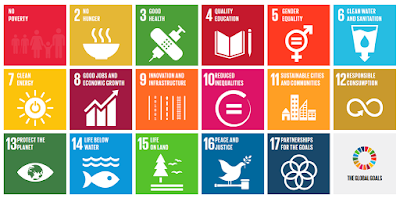
Come September, all countries that participated in the MDG must re-evaluate and submit new goals, which will become the SDG. Of the seventeen SDG declared so far, one goal directly focuses on women, while many others have the potential to impact gender in positive and critical ways. Goal #5, the aim of achieving gender equality and empowering all girls and women, is only one of many and yet impacts almost every other issue at stake. In fact, a 2014 study by the Copenhagen Consensus Center providing guidance on which of the drafted SDG targets were the best investments rated those aimed at gender equality among the highest. Still, many governments fail to invest in the leadership and capacity-building of women, they fail to increase resources to address violence against women or to ensure access to reproductive health care, and they fail to recognize the disproportionate financial and environmental burden women bear as food producers and providers, community caretakers, and natural resource stewards. The global success of women represents our greatest hope for a reconciled world, and this is something that must be taken seriously by the SDG and world nations.

http://www.un.org.me/news/1207/127/MEET-THE-PROPOSED-SUSTAINABLE-DEVELOPMENT-GOALS

The Millennium Development Goals gave us a glimpse of a world where change is possible. Through WEA’s vision of recognizing essential women’s rights, and building global networks of empowered female leaders, the Sustainable Development Goals have the potential to create a world where change truly is sustainable.


************************
Further Reading
http://iwhc.org/resource/10-red-flags-for-the-zero-draft-of-the-post-2015-development-agenda/
http://www.refinery29.com/2015/07/90279/united-nations-goals-report-gender-equality

Tuesday, August 11, 2015

Everything Connnected to the Land is Connected to our Bodies

The links between land and body have never been more apparent than in recent years, with extractive industries drilling, mining and fracking lands on or near traditional Indigenous territories, providing economic benefits to transnational corporations and national economies at a cost impacted communities are still grappling to understand. A cost most deeply felt by Indigenous women and young people.

This is why WEA is currently working in partnership with Native Youth Sexual Health Network (NYSHN) to explore this critical intersection and ways to support the leadership of young Indigenous women who are resisting environmental violence in their communities.

To learn more about this work, please visit our website.

This beautiful piece was done by WEA Intern, Katie Douglas, for WEA's initiative on environmental violence.

 
From the artist: Each day that I spend interning at WEA teaches me more on the intersectionality that binds women’s rights, indigenous communities, and the environment. While the natural symmetry of these three elements is beautiful, the reality of their existence in our world is often one of destruction and injustice. As the greed of industry spreads, it is impossible not to see the direct correlation between detrimental environmental practices and their impacts on women with regard to health, culture, and actions of violence. From this, I was inspired to create an image that could begin to express humanity’s violation of the Earth as a parallel to humanity’s violation of the women’s bodies.

The open copper pit mine of the her belly shows that humanity is not only extracting Earth’s resources, but also that by plundering straight from her womb we are destroying any chance of future life. An oil well symbolizes the pollution that degrades the environment of so many native communities, while the flag is a symbol of the widespread domination of the Earth, indigenous peoples and women. Deforestation and waste are represented by the stump and can, and placed on her breasts to show our extreme dependence on these non-renewable resources. Despite the bleak outlook of the image, the ball of light in her hand represents my feeling of hope. Because if WEA has taught me anything, it is to trust to in the immense and impenetrable power that women hold in our hands to change this world for the better.

Tuesday, July 14, 2015

Pope Francis’ Encyclical: A Message of Hope for the Earth, but Where are the Women?

By: Katie Douglas, WEA Intern

“Laudato Si” or “Praised Be to You”, Pope Francis’ recently released environmental encyclical, details how the collective actions of people are responsible for the irreversible degradation of our Earth. Subtitled “Care for Our Common Home”, the encyclical speaks boldly to the need for change to the structural injustices that drive environmental devastation. However, as the many years of WEA’s work has shown us, the Pope fails to identify one of the most prevalent social injustices that directly links to climate change: gender inequality. The question we—as women, as allies, as actors in our global community—are left with, then, is: how can humanity care for the planet while half of our population continues to fight for an equal position in ‘our common home’? 

In general, the encyclical takes an important stance as it calls for people to accept our role in and impact on the degradation of the Earth. This has been the most controversial point of the statement across religious and political spheres, with Pope Francis calling out the unrestricted rights of human “dominion”. He states that being created in God’s image does not give humanity justification for the domination of other beings, and such “dominion theory” has only encouraged the destructive exploitation of the natural world. Our greed, he says, has led to an alteration of the Earth’s natural cycles, resources and productive capabilities. To find solutions, Pope Francis stresses the need to bring impoverished and Indigenous voices to the center of environmental discussions. This is a critical steps since, as we have learned from our partners, these communities already face the damaging impacts of climate change in acute ways, even though they’re often not the drivers of this destruction.

What this landmark statement doesn’t do is highlight the fact that even within these communities, women are typically those most disproportionately impacted by environmental degradation due to their roles as mothers, food providers, and community caretakers. However, despite this overall lack attention paid to gender issues and impacts, the Pope does acknowledge that, "This sister [Mother Earth] now cries out to us because of the harm we have inflicted on her by our irresponsible use and abuse.... We have come to see ourselves as her lords and masters, entitled to plunder her at will." As we read this, we are reminded of the direct link between the body of the Earth and our bodies as women. The violence to Mother Earth that Pope Francis talks about is seen reflected in the violence experienced by women through climate change, pollution and natural resource development. At WEA, this is one of many reasons we are committed to supporting grassroots women around the world who intimately understand the interconnectedness of our place in this world as both women and stewards of the Earth, who draw strength and wisdom from our relationship with Mother Earth, and who are stepping forward and leading our communities toward a future where we co-exist in equality with one another, and in reverence of the Earth.

Gender equality must become recognized as a central point to the environmental movement, especially in a world where women living in poverty are the demographic most affected by the effects of our actions. While we applaud Pope Francis for taking this important first step in directing humanity’s attention to our historically negative impact on the environment, and for boldly calling for change where it is so very necessary, we stand firm in the knowledge that respect for our Earth and respect for women are undeniably linked.  We must understand this simple truth: we cannot have one without the other.

__________________________________
Further reading:
Mother Earth Cries Out & We Must Listen and Act Boldly--Reflecting on Pope Francis's Encyclical on the Environment
"Sister Earth Cries Out": Did Pope Francis Just Proclaim an Eco-Feminist Theology?

Friday, May 8, 2015

A Mother's Day Call to Protect the Earth

This Sunday is the day of the mother, the day we honor the source of life.  As we give thanks for our very existence, for all the nurturing and resources our mothers provide for us so that we may grow and thrive, we also celebrate our shared mother—the Earth itself.  Without her flowing waters, warm sun, rich soil and fresh air, even our most advanced technologies wouldn't be able to sustain our collective life here.

It feels like just yesterday that WEA's Co-Directors, Melinda and Amira, were both becoming new mothers—and then mothers once more!  But today, they each have two sons, all under the age of three, and it's taken us just a moment to realize how quickly time has flown.


 The women of RENAMITT.  Photo by: Semillas, a partner of WEA
At its heart, our work here at WEA has always been about nurturing women at the grassroots—honoring and uplifting the work of women and community caregivers around the world who are mothering children and mothering movements.  We do this because we recognize the undeniable connection between our experiences as women—as mothers—and the experiences of our first mother, our shared planet earth.

Last week, WEA had the opportunity to attend the Indigenous Birthways convening at the BirthKeepers Summit here in Berkeley, CA.  There, we heard Mohawk elder and midwife, Katsi Cook, speak about these links, and her wisdom is reflected in her written work.  "Women are the first environment," she teaches.  "We are privileged to be the doorway to life.  At the breast of women, the generations are nourished and sustained.  From the bodies of women flow the relationship of these generations both to society and to the natural world.  In this way is the earth our mother, the old people said.  In this way, we as women are earth."

Our grassroots partners around the world remind us of the truth in these words.  In India, the traditional knowledge women hold of seed saving, home gardens and climate adaptation help rural communities usher in locally-centered and sustainable futures.  And in North America, young Indigenous women leaders resisting environmental violence bear witness to the simple truth that everything connected to the land is connected to our bodies.

These fierce women are birthing transformation, not only in their communities, but in the world.  WEA is committed to standing alongside these leaders as they do the essential work of safeguarding our environment and generations to come.

This Mother's Day, please consider making a tax-deductible gift in honor of Mother Earth and the amazing mothers in your world.  Your contribution will help us to continue supporting grassroots women today who are stepping forward to demand clean water and healthy food, protect sacred lands and traditional knowledge, resist dirty energy that harms our lands and bodies, and design sustainable solutions.

Most of all, we invite you to take a moment today to stand on the earth, give thanks for all that she provides, and make a commitment to protect her, for the sake of future generations and all life.

We wish you a peaceful Mother's Day.

Monday, May 12, 2014

#Proud2BIndigenous Week

Did you know this week was First Peoples Worldwide's Proud To Be Indigenous week?

WEA's Advocacy Network Coordinator, Kahea Pacheco, shares why she's so proud to be Indigenous: 


Because it grounds me in my history, my legacy, and my responsibility.  Hawaiians are a strong and resilient people that took care of community and land, and that's something I can look up to."


Wednesday, April 30, 2014

Reject and Protect: Cowboy Indian Alliance Takes a Stand Against the KXL

By: Sophia Sparksworthy, WEA Intern

"The [Cowboy Indian Alliance] asks President Obama a simple question: Is an export pipeline for dirty tar sands worth risking our sacred land and water for the next seven generations?"— Reject and Protect, Call to Action

Photo by Mike Hudema

In an effort to tap into domestic oil supplies between the United States and Canada, the construction of a massive pipeline to transport the oil from the tar sands in Canada to the Gulf of Mexico has been underway since 2005.  But brave opposition to the construction of the Keystone XL Pipeline—led by Indigenous groups and leaders, environmental and social justice organizations, and community activists—has grown with increased public awareness about the environmental and social impacts it poses.

In recent weeks, and after years of organized resistance, prolonged reports, and court rulings, President Barack Obama's administration announced that its final decision on whether or not to approve the Keystone XL Pipeline has been delayed indefinitely by the State Department.  This announcement came in the midst of the Reject and Protect rally in Washington DC, and signified a new opportunity for continued and amplified resistance to dirty oil.

The rally and accompanying encampment, which ran from Earth Day, April 22nd, through Sunday, April 27th, was the result of a fierce and historic partnership between tribal communities, ranchers, and farmers from Nebraska, Minnesota, and North and South Dakota living in the pipelines direct path who came together to form the Cowboy Indian Alliance.  Their unified mission is to reject the pipeline and protect the sanctity and well-being of their health, livelihoods and traditional lands.  Among the thousands of allies, supporters and demonstrators who stood in solidarity with the Cowboy Indian Alliance was their own Dallas Goldtooth, representatives from the Tsleil-Waututh First Nation, the Cheyenne River Sioux and the Yankton Sioux Nation, Honor the Earth, Bold Nebraska, musician Niel Young and actress/activist Daryl Hannah, and many more.

Photo by Mark Hefflinger / BOLD Nebraska

Reject and Protect kicked off with the establishment of the encampment at the National Mall.  Over 24 ranchers and tribal members from the Cowboy Indian Alliance rode on horseback from the Capitol to the encampment to signify the official start of the five-day event.  Members of the alliance helped to construct a hand painted tipi as a gift to President Obama, which was presented to the Smithsonian National Museum of the American Indian on Saturday, April 26th.  The tipi's adornment of blue and green lines, trees, horses, stars and fingerprints were representations of the sacred connection between people and their environment, and the Cowboy Indian Alliance's hopes for protected land and clean water.

Each day of the encampment was initiated with a Traditional Water Ceremony in the morning to highlight the threat the Keystone XL poses to our waters, and consisted of various forms of action against the pipeline.  This included meetings with environmental leaders and the White House, where members of the Cowboy Indian Alliance were able to voice their concerns about the pipeline and the use of tar sands; a projection of comments against the pipeline across the Environmental Protection Agencies offices; a protest at the Lincoln Memorial meant to demonstrate the injustice tribal community members and ranchers face when speaking up for themselves and the earth, while corporations such as TransCanada are able to operate with little accountability for their enviornmentally destructive practices; and an interfaith prayer ceremony which was brought to Secretary of State John Kerry's front yard.

Photo by Rae Breaux

The closing ceremony at the White House on the encampment's final day allowed all of those involved with the resistance to the Keystone XL to be heard.  The ceremony signfied the end of one chapter of strong and unified resistence against the pipeline, as well as the opportunity to increase resistence and our alliances in the coming weeks and months.

Reject and Protect truly was a call to action and a chance to begin building even stronger partnerships to protect communites and the earth as we move forward toward a future that respects our communities and our joint responsiblity to care for and safeguard our planet.

WEA is humbled and inspired by the work that was done in Washington DC, and offers our heartfelt thanks and support to those involved.

Tuesday, April 1, 2014

The Threat to Sacred Waters and Ways of Life for California Indigenous Communities

By: Sophie Sparksworthy, WEA Intern

"Indigenous peoples have the right to the conservation and protection of the environment and the productive capacity of their lands or territories and resources." — Article 29, UN Declaration on the Rights of Indigenous Peoples

The Klamath River, Northern California.
Photo source: USFWS Pacific Southwest Region
--> The physical health and cultural well-being of Indigenous communities are threatened by increasing environmental degradation.  Negative ecological impacts from extractive industries, energy plants or refineries, and the contamination of hazardous waste on Indigenous lands compromises the survival of Indigenous communities both globally and locally.  Indigenous communities are in an ongoing fight to restore their ecosystems to meet their present needs, but they are also challenged with ensuring the integral parts of the environment remain intact for future generations.

The continued degradation of each component of our ecosystem has serious implications for the species and cultures that inhabit them.  Of these impacted components, waterwhich for many Indigenous cultures in inextricably linked to subsistence, spiritual practices, and traditionshas become increasingly threatened by prevailing long-term issues and the emergence of new ones.  Along with long-standing water related issues like contamination, Indigenous communities are also faced with increased threats to water supplies from climate change.  This is especially true in California, where the third year of drought has created a state of emergency.  The effects of the drought combined with California's attempts to follow the national push towards energy independence through increased fracking poses an even greater threat to the vitality of Indigenous lifeways and the ecosystems we all depend on.

Mercury Contamination in California

"Indigenous women are life givers, life sustainers and culture holders.  Our bodies are sacred places that must be protected, honored and kept free of harmful contaminants in order for the new generations of our Nations to be born strong and healthy." Declaration for the Health, Life and Defense of Our Lands, Rights and Future Generations, Report of the International Indigenous Women's Environmental and Reproductive Health Symposium, 2010.

For California Indigenous communities, the fight to protect the quality and supply of water has been a very real threat for centuries, particularly due to the regions history of mining and gold extraction.  Sediments and other hazardous materials like methylmercury have contaminated land and aquatic habitats and have had adverse health effects that vary based on the age and level of exposure an individual has.  This exposure can cause damage to both the nervous and immune systems, with the worst case scenario being death.

Photo source: Coastal Creature
Indigenous communities have experienced the impacts of mercury poisoning first hand, with deaths among older generations who had been chronically exposed without their knowledge.  Unfortunately, the threats of contamination are still present, especially for future generations.  For pregnant women, mercury can cause irreversible damage to unborn children, inhibiting normal brain development, and in more severe cases causing developmental and mental birth defects.  For Indigenous communities in which fish is a traditional food source and whose cultures cannot be separated from this critical relationship, the tragic choice becomes one between health and identity.

These issues of water contamination in California are also not isolated, with high levels of mercury found in waterways such as: Lake Berryessa, Clear Lake, New Almaden and New Idria, the American, Bear, Feather and Yuba Rivers, and the San Francisco Bay.  The international and regional response by authorities to the contamination issues California tribes such as the Pomo, Maidu, Yurok, Karuk and Winnemem Wintu face has been minimal in comparison to the scale of the problem.

Indeed, while EPA clean ups have been more frequent since the 1990's and advisory warnings about fish contamination have been issued, this has done little to address the fact that tribes are unable to exercise their traditional fishing treaty rights—and the threat of further pollution is ongoing.  To this end, in 2005, the International Indian Treaty Council (IITC) filed an international complaint against the United States asserting that the contamination Indigenous communities faced was a human rights violation.  In the complaint, the National Tribal Environmental Council (NTEC) provided testimony which stated:
"The proposed UMR [the EPA's Utility Mercury Reduction] rule fails to protect and preserve federal treaty trust resources, such as hunting and fishing rights, which are considered integral to many tribes continued existence...Instead, EPA instructs these groups—and particularly children and women of childbearing age—to reduce or eliminate fish from their diets in order to 'avoid' the risks of mercury contamination.  Thus, rather than take steps to reduce meaningfully the sources of these risks, EPA shifts the burden to those who are exposed and asks them to protect themselves."
While these and other efforts are critical and ongoing, some communities fear that the response—if any— will be too slow to address the severity of the issue.  California's Indigenous tribes are at an extremely high risk for ongoing contamination, with some estimates stating that the current rate of clean up will leave the land and water contaminated for the next 10,000 years.  Despite the slow progress of the State and Federal governments, organizations like IITC and the California Indian Environmental Alliance, alongside a network of Indigenous and environmental groups, have helped communities fight for the right to information about contamination, and to expedite the process to have their ecosystems and traditional ways of life protected.

Climate Change and Drought in the West

Effect of the drought on the Uvas Reservoir.
Photo source: Don DeBold


For Indigenous communities, the fear of losing traditional ways of life connected with water is further exacerbated by another devastating issue.  The third year of drought in California has forced Governor Jerry Brown to declare a state of emergency.  As a result of water resource allocation focused on supplying both Southern California's reservoirs and the water needed for the State's massive agricultural industry, much of the limited water supply in Northern California's reservoirs has already been drained.


For tribes in Northern and Central California, this means that traditional species of fish like steelhead and chinook salmon will no longer be protected as their habitats shrink to meet the demands of the rest of the state's water needs.  Indeed, proposed solutions to meet the state's water demands include constructing large underground pipes to transport water from the top of the state to the bottom.  The Winnemem Wintu have been some of the strongest voices opposing this plan because it threatens the survival of salmon and other native fish populations that many in California—Native and non-Native alike—rely on.

Don't Frack California

Indigenous communities often face more than one threat at a time to their ecosystems and cultural survival.  Instead, we see the threats to traditional ways of life coming from multiple directions at once.  Thus, along with efforts to reduce contamination and water supplies, tribes must also resist the forces of extractive industries, which leave ecosystems traumatized.  Some of the most recent national and local resistance against extractive industries has focused on hydraulic fracturing, the high pressure blasting of water and chemicals in the earth in order to produce gas and oil—commonly known as fracking.

Not only does fracking contribute to water, air and land pollution, as well as climate change, but the human health hazards are equally frightening, with chemicals used in the blasting being linked to birth defects, and even infertility.  In California, though resistance is gaining in strength, the mainstream debate as to whether or not to continue fracking is still underway.

In recent months, the Don't Frack California campaign has gained significant momentum, with over 4,000 peopleincluding Indigenous community members, environmental advocates, and concerned citizens—expressing their opposition to fracking in Sacramento on March 15th.  As a result of the efforts leading up to this rally, in February a moratorium (SB 1132) was introduced to prevent continual and future extractive industries like fracking from operating in the state.  California's resistance to fracking is only part of a national resistance movement that is supported by both Indigenous and non-Indigenous advocates and activists alike.

Women's Earth Alliance encourages all our friends to be good allies: learn more about these critical issues California Indigenous peoples face and do your part to support efforts to end the destruction of their traditional lands, waters, and ways of life. 

For more information on mercury contamination, please visit the International Indian Treaty Council or Earthjustice's Cleaning Up Mercury, Protecting Our Health Campaign.  To learn more about the effects of California's drought on Indigenous communities and native species, visit Restore the Delta and the National Resource Defense Council.  And to further understand how the drought effects Indigenous communities in Northern California, please visit the tribal website of the Winnemem Wintu and the Yurok people.

Thursday, February 6, 2014

The Long Arm of the Tar Sands: The Alberta Clipper Pipeline

By: Kahea Pacheco (Advocacy Network Coordinator) and Sophie Sparksworthy (WEA Intern)

"[We recognize] that the tar sands in northern Alberta, Canada is one of th elargest remaining deposits of unconventional oil in the world, containing approximately 2 trillion barrels, and there are plans for a massive expansion of development that would ultimately destroy an area larger than the state of Florida[.]" -- Mother Earth Accord, Sept. 2011

The expansion of crude oil pipelines carrying Alberta tar sands from Canada to the United States is arguably one of the largest environmental concerns in North America in recent years.  The human and ecological damage these developments--as well as our populations continued dependency on fossil fuels--will cause is no longer something that can be ignored.  For years now, Indigenous advocates, activists, and local community leaders have fought on the frontlines of campaigns to stop these pipelines, and while efforts around the Keystone XL (KXL) pipeline have thankfully garnered much-needed attention and public interest, it is only one of the highly destructive pipeline proposals Indigenous communities currently face.

"[We recognize] that tar sand development has devastating impacts to Mother Earth and her inhabitants and perpetuates the crippling addiction to oil of the United States and Canada[.]" -- Mother Earth Accord, Sept. 2011

In Alberta, Minnesota and Wisconsin, communities and tribes are also facing the proposed expansion of Enbridge Energy's Alberta Clipper and Sandpiper pipelines.  The Alberta Clipper expansion will run 1,000 miles from Alberta, Canada, across Minnesota and into Superior, Wisconsin, and will increase the flow of crude oil from 450,000 to 570,000 barrels per day.  An additional expansion is proposed to bring flow up to the pipeline capacity of 880,000 barrels per day.  If the expansion is approved by the Public Utilities Commission of Minnesota, Enbridge will begin construction this year.

Photo source: InsideClimate News

These expansions have been met with strong resistance from Indigenous communities and organizations, landowners, farmers and environmental advocates who not only understand the spiritual, cultural and environmental damage the development of crude oil can cause, but are also painfully aware of Enbridge's poor track record for safety, maintenance and disaster management around its pipelines.  The Big Oil company has had numerous spills in recent years, one of which resulted in the largest on-land oil spill ever recorded, leaking 1.15 million gallons into the Kalamazoo River in Michigan in 2010.

Enbridge oil spill into the Kalamazoo River, 2010.  Photo source: US EPA, 2010.

"[We are concerned] that Indigenous people are most vulnerable to the social, cultural, spiritual, and environmental impacts of climate change[.]" -- Mother Earth Accord, Sept. 2011

One of the voices leading opposition against the Alberta Clipper and Sandpiper expansions is Winona LaDuke (Anishinaabe), Executive Director of Honor the Earth.  Honor the Earth's 2013 Ride for Mother Earth campaign was both a show of strong solidarity with the Lakota Nation as they fight the KXL which will cross into their territories, and opposition to tar sands and fracking imports into Minnesota, where lakes, rivers, wetlands and communities are already over burdened by high rates of toxicity and health issues because of hazardous chemical exposures from polluting industries like Big Oil.  The ride--during which Anishinaabe, Lakota and Ponca riders traveled over 200 miles along the pipeline--aimed to bring attention to the Enbridge pipelines and the destruction they will cause if built, including the threat to women and children as a result of the influx of pipeline workers into the surrounding areas.

Honor the Earth stands in good company in the transnational opposition to these pipelines.  Other community organizations at the forefront of advocacy efforts to stop dirty oil include Indigenous Environmental Network, Protect the Sacred, as well as Nizhawendaamin Inaakiminaan (We Love Our Land), a group of Red Lake Band of Chippewa Indians, which just last year built encampments on four Enbridge pipelines to protest the company's violations of their tribal territory.

"Therefore, we are united on this Mother Earth Accord, which is effective immediately, that it be resolved as follows: We support and encourage a moratorium on tar sands development; We insist on full consultation under the principles of 'free, prior and informed consent,' from the United Nations Declaration on the Rights of Indigenous Peoples both in the United States and Canada[...]" -- Mother Earth Accord, Sept. 2011

WEA encourages all our friends and allies to talk to your friends, family and colleagues, and share as much information as you can about all dirty oil pipelines--the Keystone XL, the Alberta Clipper, the Sandpiper, and others.  For more information, and for ideas on how you can get involved and make your voice heard, visit Honor the Earth's website.  Public education is crucial; it will take our shared efforts to recognize the threats we face, and to find the solutions to protect our communities and planet from these destructive developments.

Wednesday, January 29, 2014

Congress Passes Bi-Partisan Bill with $50 Million Increase for WASH

By Gemma Bulos, GWWI Director

Last year, I was honored to present GWWI’s work at the historical launch of USAID's Water and Sanitation Development Strategy alongside Senator Richard Durbin, Senator Chris Coons, Congressman Earl Blumenauer, Congressman Ted Poe and USAID Administrator Rajiv Shah and USAID Global Water Coordinator Chris Holmes.

This was a significant milestone for USAID as it shows their commitment to prioritize WASH as a one of their key strategies to provide international aid to uplift communities around the globe.

Yesterday it was announced that on January 17, President Obama signed into law a sweeping, bipartisan $1.1 trillion spending bill that increases funding for safe drinking water in developing countries by over 20 percent.

The Omnibus Appropriations bill, which includes the State and Foreign Operations budget for the Department of State and the United States Agency for International Development (USAID), provides an increase of $50 million for safe drinking water, sanitation, and hygiene (WASH) projects, potentially providing water and sanitation to over three million people in Africa, Asia, and Latin America over the course of the coming fiscal year. (WASH Advocates)

John Oldfield, CEO of WASH Advocates, noted, "Politics stops at water, and this is clearly one issue on which both Republicans and Democrats can agree.”


Go to 7:07 for Gemma’s GWWI presentation

It has always been my belief that water is the master equalizer in that the smallest plant and the richest man are equal in that we all need it to survive. My past work as the Founder of A Single Drop and now as the Director of the Global Women’s Water Initiative was based on the premise that because our shared need for water transcends politics, religion, etc, it’s a place where we all agree and therefore a platform where we can start a conversation and even collaborate.

All the WASH programs that we have designed have focused on uniting communities, engaging all the relevant stakeholders and supporting collaborative community-driven efforts to resolve their own water issues. It’s a thrill to see the US government recognize the need for these kinds of strategies to address the most pressing issues of this century.

Like GWWI on Facebook
Follow GWWI on Twitter
Follow Gemma on Twitter

Wednesday, December 18, 2013

Phionah: From Sex-Worker to Water Champion

By Gemma Bulos, Global Women's Water Initiative Director

I have been a sex worker for so many years, but when I met Godliver (GWWI Head Technology Trainer), I have withdrawn. She trained me on tanks, now I can make bricks, I can make a tank... I think I can almost be a technical engineer!” Phionah Mbugua

Every once in a while you come upon someone who is truly the embodiment of transformation and inspiration. For our Global Women's Water Initiative, Phionah Mbugua is that person.

Phionah came to GWWI through Life Bloom Services International. Life Bloom works with commercial sex workers providing them with emotional counseling and services as well as vocational training to consider alternative livelihoods to uplift themselves from their situation. Life Bloom women leaders have been participating in the Global Women’s Water Initiative Training Program since 2011, where they have been learning to  become water, sanitation and hygiene (WASH) technicians, educators and entrepreneurs.

Phionah was one of Life Bloom's clients. When her husband left her 14 years ago with 2 kids, she had to raise her children on her own. And with a 7th grade education, she felt her only alternative was to sell her body.  She was invited by Life Bloom to learn how to build a rainwater harvesting system and tank from GWWI Technology Trainer Godliver Businge. Phionah was astounded to meet a woman who not only could build things like tanks and toilets, but who was teaching other women these same skills.

Because of Phionah’s talent and interest, Life Bloom’s Executive Director who has been elected as the Board Chair of her local water board, withdrew from the GWWI training program to let Phionah take her place. Phionah has since been hired by Life Bloom as their first WASH program manager and is currently construction WASH technologies, offering WASH education in schools and in the community. And she's getting getting paid to do this work.
In this video Phionah shares with her GWWI sisters and fellow participants her story of transformation. (Transcript below)


Hello. I think I’m one of the retired sex workers! I have been a sex worker for so many years, but when I met Godliver, I withdrew. She trained me on tanks, now I can make bricks, I can make a tank, I think I can almost be a technical engineer. Yea, with my fellow colleagues the sex workers,  we have done the first tank we did it in a primary school and we want to do the other tank in a primary school.
So my fellow sex workers, they are very happy because when you come from building the tank, in the evening, we are so tired, even we can’t be able to go to the streets! I appreciate Godliver for the change she has brought to us because we were selling our bodies day and night you see because we don’t have anything to do in our life. Like, we don’t have courses. Like me, I learned up to class 7.
So right now, I’m learning, I want to do my class 8 next year. I want to get my diploma certificate this year so I’m sure I’ll do it, because you have empowered me.  Now my children are appreciating me. They are appreciating my job, even my family. Because before I was a drunkard, I couldn’t even listen to them. But right now I’ve changed. Like now my mom yesterday was asking me

“Oh, where are you going?” and I told her,

“I’m going meet other women in Kisumu. I’ve never been to Kisumu.”

And right now, even me , I don’t even feel like selling my body.  I’m very fit now. I’m 45 years (old). I’m retired and I don’t want my young girls who are behind me to follow my steps. Right now I want to follow these steps – of building tanks. Building biosand. And I think for biosand I am qualified because the last three weeks, the mortar followed me so I think  I have one certificate.
So I thank you ladies. We are together. I’m from Life Bloom. And I think because I’m interested, that’s why my boss withdrawn for me, ‘you can go instead of me Phionah.’ Because I’m interesting, interested and I’m strong.  And I will do it. And right now I’m going for another tank. Thank you so much!
Support the Global Women's Water Initiative here!
For more inspiring stories, visit Global Women's Water Initiative blog and follow on Twitter at @womenwater -or- @gemmabelle. Join us on facebook.com/womenwater 

Thursday, December 12, 2013

The Winnemem Wintu and the fight for the McCloud River


By Kahea Pacheco (Advocacy Network Coordinator) and Molly Garritson (WEA General Intern)

The salmon are an integral part of our lifeway and of a healthy McCloud River watershed. We believe that when the last salmon is gone, humans will be gone too. Our fight to return the salmon to the McCloud River is no less than a fight to save the Winnemem Wintu Tribe.

The Winnemem Wintu Tribe of Northern California has inhabited their ancestral territory for well over 6,000 years. This territory runs from Mount Shasta down through the McCloud River watershed and is bordered by both the Sacramento and Pit Rivers.  Indeed, the original name of the McCloud river is, in fact, Winnemem, meaning “middle water.”


The Winnemem then are middle water people, salmon people, and their lands and river hold many sacred sites and traditional medicines central to their cultural and spiritual identity.  This identity, which has been under attack ever since the settlement of California which brought disease and destruction to Native peoples, has faced yet another threat since World War II: the construction of the Shasta Dam, which flooded Winnemem homesteads, ancestral villages, cemeteries, sacred places, and has blocked salmon runs along the river.

The McCloud River was once one of the most fertile breeding ground for Chinook salmon in the West.  The salmon’s numbers were so high that in the late 1800’s, fish culturist Livingston Stone established the Baird Hatchery in an effort to breed this salmon and replenish dwindling Atlantic salmon stocks.  The Winnemem people opposed the building of the hatchery and took action to defend their river by performing a Hu’p Chonas—a war dance ceremony that tells the water and all Winnemem relations that they are fighting for the well-being of the river.

Unfortunately, construction of the Baird Hatchery went forward. When the hatchery began exporting eggs around the world (including all the way to New Zealand), an agreement was made that, while the salmon would be captured for breeding, the Winnemem would ensure that they would always be able to return to their home on the McCloud River.  However, this agreement was later broken when the Shasta Dam was built, blocking salmon’s path and submerging their breeding grounds, and eventually causing their near extinction.

“The dam not only took our homelands and cemeteries, it took our salmon.  Where the water used to run black with writhing spawning salmon, now there are none.  They cannot get past the dam to their spawning beds.  The fish hatchery is long gone.  So are the fish.  The Winnemem remain.”

In recent years, the Winnemem have continued to fight for the salmon and for their way of life as they oppose an additional rise of the Shasta Dam by 18.5 feet.  Raising the dam even just a small amount would submerge Winnemem herbal gathering grounds, whatever is left of salmon spawning grounds--threatening any potential for salmon restoration to the McCloud--and would also disturb 39 sites along the river that are sacred to the tribe, such as Puberty Rock where coming of age ceremonies are held for Winnemem girls, and the site of a massacre of the Winnemem by settlers in 1850’s.    

Speak out in support of the Winnemem
Photo by Amit Patel
The Bureau of Reclamation (BOR) is responsible for any decisions to raise the Shasta Dam, and also for selecting the plan to restore the McCloud’s native ecosystem by returning the salmon to the Central Valley.  Though the Winnemem have been asked to submit their own plan to return the salmon to their indigenous territory, they have been given no voice in the decision-making process.  


Stand alongside the Winnemem Wintu Tribe and support their indigenous right to be part of the salmon decision by calling or e-mailing Sue Fry, BOR Project Manager, at sfry@usbr.gov or (916) 414-2400.  Demand that the BOR bring the Winnemem to the table as a consenting voice to any Salmon Restoration Plan, and recognize their right to be leaders and critical decision-makers in the process. 

We encourage all of friends and allies to also email or call the Bureau’s Commissioner Michael Connor at comments@usbr.gov or (202) 513-0501, and urge him not to submit the Shasta Dam raise proposal for a vote to Congress and instead support Winnemem cultural survival.

More information on how to stand in solidarity with the Winnemem can be found here.


(Quotes and photos are property of the Winnemem Wintu Tribe unless otherwise attributed)

Wednesday, November 20, 2013

Leading from a Place of History and Learning

By Kahea Pacheco, WEA Advocacy Network Coordinator

I grew up in a tiny, rural town on the Hamakua Coast of the Big Island of Hawai’i called Honomu.  We are maybe 550 people large, and are a remnant of the old sugar plantation days when the Big 5 sugar companies were king and villages would crop up along coastlines where sugar mills were located. It’s a beautiful, multicultural landscape where eating sugar straight from the cane stalks, watching our fathers throw cast nets down at the ocean, and swimming or catching ‘opae (shrimp) in the streams and waterfalls seemed ordinary. 

The first time I can remember recognizing that I was indigenous was when I was sent to a summer camp for Native Hawaiian kids in the fifth grade.  It was a week-long program on a different island from the one I lived on, and I remember knowing I should feel lucky I could go.  That going and learning about my culture was something special, and not everyone had that opportunity.

The second time this happened was when I was accepted into Kamehameha Schools, Kapalama Campus—a private boarding and day school for Native Hawaiian students.  The school, one of the largest philanthropic trusts in the United States, was founded by Ke Ali’i (Chiefess) Bernice Pauahi Bishop, great granddaughter of King Kamehameha I, after she bore witness to the decline of the Hawaiian people as a result of colonization and the illegal overthrow of the Hawaiian Kingdom, and felt education was key to our survival.  At Kamehameha, I learned about my legacy, culture, history and language.  I was given opportunities—through school programs, mentorship and scholarships—that allowed me to graduate, to go to college, then law school.

All of this, because I’m Native Hawaiian, and I am a result of our unique history.

For me, being indigenous has been a privilege, both spiritually and practically.  I feel extremely fortunate to have grown up in a space that not only taught me about my history, about myself, but that celebrated it.  Because of this, I also recognize my responsibility.  I have a responsibility to be a leader and a student all at once, to be a good role model, and to give back and uplift my community just like it has uplifted me.  I have a responsibility to those who came before me—my kupuna (grandparents, elders), my ancestors—as well as those who will come after me, for generations and generations to come.

“You will be living the haole time, and the wise thing to do is to move with the time, because time is a thing that belongs to no one….There’s only one thing I ask of you, my children—You are Hawai’i, and I would appreciate that you remain Hawai’i.”
– Pilahi Paki (in Then There Were None by Martha H. Noyes)

It’s this journey, however short it’s been so far, that has led me to Women’s Earth Alliance.

I first joined WEA as a Legal Research Intern for the North America Program in 2011.  At the time, I’d been out of law school for two years, had just left from a job that left me feeling disconnected from all the ways I wanted to be present in the world, and so accepted the internship feeling a sense of…relief.  Relief that I would once again be contributing to work I felt most accountable for—supporting Indigenous peoples and communities like my own.

In the two and half years since joining the team, my sense of purpose and responsibility has only been strengthened, particularly in this last year as I’ve stepped into my new role as Advocacy Network Coordinator for the North America Program.  I now find that I am a leader as much as a student, that I am called to make decisions as much as seek insight and advice and guidance.  With this new role then also comes the fear I think many people, particularly young people like myself, have felt when stepping up and being called to share their mana’o (knowledge): fear of not being ready, of making mistakes, of saying or doing the wrong things at the wrong times, of not knowing. 

“There are cultures still that understand the importance of being lost.  In fact, they celebrate it, because they know that just beneath the surface, something rich and potent is stirring.  They know that the point at which the latitude of the mind meets the longitude of the heart is the centerpoint.  It is the stillpoint of the wayfinder.”
– Dr. Elizabeth Kapu’uwailani Lindsey, PhD (TEDxWomen 2012)

But it’s times like these, when stepping up, that we need to remind ourselves that we are rarely stepping up alone.  Instead, we are surrounded by the knowledge passed to us from our elders, from our mentors, from our own experiences.  And there are those we defer to, whose expertise is so much more vast than our own—their knowledge is to be recognized and celebrated as well.

For me, this has meant listening deeply to not only myself, but to my sisters, my parents, my grandparents, stretching all the way back to my ancestors, my beginnings.  Stretching all the way across to encompass my larger community—my friends, my colleagues, and the grassroots leaders engaged in this work.  It has meant asking questions, being courageous in my conversations, and honoring those who have shared their stories, knowledge and expertise with me.  This is where my ability and my drive to contribute comes from—from that place of learning and listening and growing.  

This is where, I think, as women, as Indigenous peoples, as allies, we all find our strength to contribute.

Tuesday, November 19, 2013

World Toilet Day: Everyone Goes But Not Everyone Has a Place to Go

By Women's Earth Alliance, GWWI Director, Gemma Bulos
Believe it or not, there are more people in the world that have cell phones than toilets! Which means more people can make a phone call or send a text than access a toilet. This has significant impact on public health. Biological contamination and the presence of feces in water is one of the highest causes of diarrhea and water-related disease causing millions of people to lose their lives every year.

But the issues that arise because of lack of toilets extends beyond health – it impacts safety, security and even education, especially women and girls. Women and girls are the most affected by the lack of sanitation because they are at risk of violent attacks when they don’t have a private or safe place. Many women and girls will withhold consuming food or drink during the day so they will not have to relieve themselves in the daylight. 1 out of 8 girls drop out of school by the 8th grade when they start menstruating because there are no toilets.

But sanitation is not just about toilets.  Women leaders who are participating in the Global Women’s Water Initiative WASH Service Center Training Program understand these challenges and have identified sanitation as one of their priorities in their communities. This past July, they learned to build two different kinds of waterless toilets – for safe storage of feces, and menstruation cleaning bays – so women and girls can clean themselves when they have they are menstruating. They also learned to make reusable sanitary pads as well soap, shampoo and perfume.

Take the enzymatic digester, for example. One of the most common toilets in developing countries are pit latrines. In some communities, pit latrines exist, but they are unusable, as they are full of human waste and often shut down or locked as a result. The toilet digester is an enzymatic powder that can break  down and eliminate waste in a pit latrine within 24 hours for a fraction of what it would cost to build another toilet or hire a company to extract the waste. This product is a solution for existing full toilets and can rejuvenate otherwise unused toilets. And we are discovering that participating women trainees can sell it and make a profit.

GWWI graduates now have an array of appropriate tools to start their own micro-businesses. They are being hired to build toilets and sell sanitation and hygiene-related products. Most importantly, the knowledge doesn’t end here. Our partners are helping other women do the same.

On World Toilet Day, we reflect on the courageous steps our colleagues are taking in their communities to ensure people’s safety and dignity on this day and every day.

Thursday, November 14, 2013

Weathering the Storm: Gender Dimensions of Haiyan & Climate Change


Rucha Chitnis: Director of Grantmaking, Women's Earth Alliance @ruchachitnis

As Philippines grasps the devastating scale of the destruction unleashed by Super Typhoon Haiyan, the global community must prioritize those who are being disproportionately impacted by this natural disaster—women and girls.  The typhoon has impacted over 11 million people and aid gridlocks are paralyzing relief operations with poor access and communications.  As aid and relief agencies scramble to deliver critical services to survivors, it is crucial to keep in mind the gender dimensions of natural disasters, and existing inequalities facing girls and women.

Why Gender Lens Is Crucial

Climate change and natural disasters are not gender neutral:  Women and girls face multi-faceted discrimination and inequalities globally.  Prevailing social norms – which leave women economically and culturally vulnerable in the best of times – impede women’s ability to recover from natural disasters and receive adequate support for their unique health, safety and other well-being needs.  According to a report, Because I am A Girl, women and children are 14 times more likely to die in disasters than men.

Escalation of violence against women and girls:  Disasters, such as the Super Typhoon, create crippling social breakdowns, including in law enforcement services. A study of the Center for Human Rights and Global Justice at NYU School of Law conducted in four camps of internally displaced persons around Port-au-Prince, Haiti, revealed alarming data: Of the households surveyed 14% “reported that, since the earthquake, one or more members of their household had been victimized by rape or unwanted touching or both.” The typhoon in Philippines is no different, and human rights groups are raising concerns of escalating violence against women and girls, including risks of trafficking, forced marriages and rape.

Lack of adequate healthcare: UNFPA estimates that nearly 200,000 pregnant women need additional support, with stories surfacing of women giving birth amidst the rubble. Approximately 40% of women in the Philippines deliver at home, so there is an urgent need for groups like UNFPA to provide clean delivery kits to partners and midwives. 

Women's groups in Manipur are raising awareness on climate change
and promoting women's role in governance
Way Forward: What We Are Learning From Women’s Groups  

Around the world, women’s groups, solidarity networks and movements are demanding urgent climate action and a re-examination of a carbon-fueled development paradigm. Indigenous and rural women recognize that as mothers, caregivers, food producers, water and environmental stewards, they bear a disproportionate burden from these climate-induced disasters.  Here are some holistic ways in which our grassroots partners and allies in South Asia and beyond are taking proactive steps to build community resiliency.

Empowering Women & Promoting Rights:  HIMANWANTI, Women’s Earth Alliance partner in Nepal, works to promote the rights of rural women in forest and natural resource management.  HIMAWANTI believes that it is crucial to strengthen the role of women in the management and protection of biodiversity, as well as promote equitable access to natural resources and benefits generated from its use.  They are also strengthening political literacy to build networks of healthy, conscious and empowered women throughout Nepal. 

Ending Climate Denial and Demanding Accountability to Grassroots Women:  A diverse gathering of women leaders from around the world in New York this year urged the world’s governments to make commitments to avoid a global temperature rise of 2.0 C degrees. Women also reminded the global community that citizens in industrialized nations have a responsibility to educate themselves and their worldviews and to divest from dirty fossil fuel developments, such as Tar Sands and fracking. Click here to read this powerful International Women’s Earth and Climate Summit declaration.

Promoting Women’s Decision-making:  Our partner in Manipur, India, Rural Women Upliftment Society works to holistically build the leadership of indigenous women.  RWUS promotes women’s participation in local governance, and provides capacity building support in sustainable agriculture and livelihoods to strengthen women’s food and economic security in the face of climate variability.

Respecting Women’s Knowledge and Expertise:  Across the Global South, women farmers and Indigenous women’s networks and movements are positioning themselves as knowledge holders, equipped with a powerful agency to build holistic climate solutions.  Women farmers are also seed savers, who have immense knowledge about native food crops, such as drought-resistant millet varieties that thrive in dry land areas and need little water for cultivation.

Women farmers in Karnataka are planting drought-resistant millets
and raising awareness on climate change through street theater and other activities 
Our partner in India, the GREEN Foundation, believes it is vital to value women’s knowledge and expertise to promote food security and build community resiliency. GREEN is mentoring a group of women farmers in a drought-prone region in Karnataka in community radio production, where they will share information on climate change, early warning weather signs and promote sustainable agriculture as an important strategy to promote food security and healthy ecosystems.

There is an undeniable link between existing gender inequalities and how they exacerbate women’s vulnerabilities in the face of climate change and natural disasters. Women’s rights advocates note that it is crucial to include women’s leadership and decision-making in all aspects of climate change and disaster management program implementations and policies.  Women’s participation is key in not only post disaster recovery efforts but also in proactive disaster prevention and climate mitigation and adaptation efforts.  If you wish to donate to grassroots women’s groups that are leading recovery efforts for Typhoon Haiyan, consider donating to the Global Fund for Women. Also here’s an appeal with a list of organizations to support Indigenous peoples affected by this crisis.